Blog Details
Table of Contents
- Why Profit Margins Matter in Aesthetic Practice
- 1. Optimise Your Treatment Mix for Higher-Margin Services
- 2. Implement a Data-Driven Aesthetic Clinic Pricing Strategy
- 3. Reduce Operating Costs Without Compromising Care
- 4. Strengthen Aesthetic Clinic Patient Retention and Repeat Bookings
- 5. Invest Strategically in Medical Aesthetics Equipment
- 6. Build Effective Aesthetic Clinic Marketing Strategies
- 7. Maximise Retail Product Sales and Consumables
- Frequently Asked Questions
Last Updated: October 13, 2026
Why Profit Margins Matter in Aesthetic Practice
Aesthetic clinic profit margins determine your ability to invest in equipment, hire skilled staff, and grow. Many owners chase bookings without checking whether those appointments generate profit. (Source: Australian Competition and Consumer Commission (ACCC) guidance on pricing)
A busy clinic with thin margins is fragile: one cost spike can push you into the red. Strong margins let you weather challenges and seize opportunities.
Profitability isn’t about volume alone. It’s about decisions across seven areas: treatment selection, pricing, cost control, patient loyalty, equipment investment, marketing efficiency, and retail revenue.
1. Optimise Your Treatment Mix for Higher-Margin Services
Not all treatments generate equal profit. Some need expensive consumables; others demand long appointment slots. Your treatment mix directly shapes your bottom line.
Calculate each treatment’s profit contribution: revenue minus direct costs (consumables, allocated staff time). A treatment generating $300 revenue with $180 in supplies and labour contributes $120; one generating $250 with $80 costs contributes $170, more profitable despite lower revenue.
Many clinics find their most popular treatments aren’t their most profitable. Once you identify high-margin treatments, shift marketing and scheduling to prioritise them.
Key actions:
- List every treatment you currently offer
- Calculate the direct cost of each (supplies, staff time)
- Rank by profit contribution, not revenue
2. Implement a Data-Driven Aesthetic Clinic Pricing Strategy
Pricing is where many aesthetic clinics leave money on the table. Underpricing comes from comparing to competitors without knowing your own cost structure; overpricing without justification drives patients away.
A proper aesthetic clinic pricing strategy ties price to value delivered, not competitor rates, but only if you know your numbers. Most clinics that struggle with pricing have never calculated the true cost of a single treatment.
Build a treatment-level margin model
Before you change a single price, build a simple spreadsheet with one row per treatment and these columns:
- Price charged (what the patient pays, including any package discount)
- Direct consumables (needles, cannulas, dermal filler, toxin units, numbing cream, PPE, aftercare kit)
- Practitioner time cost (appointment minutes × the practitioner’s fully loaded hourly rate, including superannuation, leave, and payroll on-costs)
This contribution-margin logic is the single most useful number in your clinic: it shows how much each appointment contributes towards fixed overheads, rent, reception, insurance, software, marketing, and then to net profit.
A worked example
| Treatment A | Treatment B | |
|---|---|---|
| Price | $300 | $250 |
| Consumables | $120 | $40 |
| Practitioner time (45 min vs 20 min) | $90 | $40 |
| Room/device cost per appointment | $30 | $15 |
| Contribution margin | $60 | $155 |
| Contribution margin % | 20% | 62% |
Treatment A looks premium because it costs more, but contributes only $60 per appointment; Treatment B contributes $155 in less than half the time. Fill the freed-up time with another Treatment B and the difference compounds.
Ranking treatments by revenue is misleading. Rank by contribution margin per appointment hour: Treatment A earns roughly $80 per practitioner hour, Treatment B roughly $465. That ratio often reshapes a clinic’s service menu.
Set prices from break-even, not from competitors
Your break-even price is where contribution margin exactly covers the fixed costs allocated to that appointment. Above it contributes to profit; below it subsidises the patient.
A practical sequence:
- Total your monthly fixed costs (rent, wages for non-billable staff, insurance, software, utilities, equipment finance).
- Estimate the number of billable treatment hours your rooms and practitioners can realistically deliver each month.
- Divide fixed costs by billable hours to get a fixed-cost recovery rate per hour.
- Add that rate to the direct cost of each treatment to find its true break-even price.
- Set your actual price above break-even by a margin that reflects demand, positioning, and the practitioner’s skill.
Review this model quarterly. Consumable prices, wages, and rent all move, and a treatment that was comfortably profitable last year can quietly slip below break-even after a supplier price rise.
Price by practitioner tier and by outcome
Tiered pricing by practitioner experience is well established in aesthetic medicine. A senior practitioner with a strong results portfolio can justify higher fees than a newer injector, provided the difference is communicated clearly at booking.
Where a treatment has a measurable outcome (skin quality, hair reduction, body contouring), price packages by result rather than session. This aligns expectations with the clinical plan, improves course adherence, and reduces discounting that erodes margin on single sessions.
Pricing actions
- Build a contribution-margin model for every treatment you offer
- Rank treatments by contribution margin per appointment hour, not by revenue
- Calculate a break-even price for each treatment using your fixed-cost recovery rate
3. Reduce Operating Costs Without Compromising Care
Operating costs, rent, utilities, insurance, salaries, admin, directly reduce profit. Many owners treat them as fixed; they aren’t. But the biggest savings come from controlling costs that scale with every appointment: consumables, inventory, and wasted capacity. Refining these variable expenditures requires a disciplined approach to inventory management and operational efficiency, which serves as the foundation for implementing broader proven profit strategies.
Control inventory and consumables like a clinical asset
Consumables are usually the second-largest cost after wages and the easiest to lose control of. Reactive ordering leads to expired stock, emergency retail-price purchases, and rooms stocked with whatever’s left over.
A simple inventory discipline covers most of the risk:
- Set par levels per treatment room. Decide the minimum and maximum quantity of each item a room should hold, and restock to par rather than to ‘looks full’.
- Track expiry dates. Dermal filler, toxin, and many skincare actives have finite shelf lives. Rotate stock so the oldest batch is used first, and flag anything within 60 days of expiry for use in a planned treatment or a staff training session rather than letting it lapse.
- Record wastage. Every discarded vial, spilled product, and unused syringe has a cost. A simple wastage log, item, quantity, reason, date, turns an invisible leak into a number you can act on. Common causes are over-drawing product, opening a vial for a single small treatment, and poor stock rotation.
Do not cut consumable costs by substituting cheaper products in treatments where the clinical outcome depends on the product. Saving $15 on a filler that produces a poorer result costs far more in lost repeat bookings and referrals.
Improve capacity utilisation before cutting staff
Staffing is the largest cost line, and cutting hours is the instinctive response to thin margins, often the wrong move. The real problem is usually capacity utilisation: how much available treatment time is actually sold and delivered.
Work out your profit per available treatment hour:
- Count the treatment hours your rooms and practitioners are available each week.
- Count the hours actually booked and delivered.
- Divide delivered hours by available hours to get your utilisation rate.
- Divide your weekly contribution margin by available hours to get profit per available hour.
A clinic at 55% utilisation has almost half its capacity producing no revenue while still paying rent, wages, and equipment costs. Lifting utilisation from 55% to 70% typically beats any single cost cut, because fixed costs are already covered.
The levers that move utilisation:
- Reduce cancellations and no-shows. Automated SMS and email reminders, a clear cancellation policy, and a waitlist that can fill a late gap all protect booked hours. A single unfilled 45-minute slot can wipe out the contribution margin of two other appointments.
- Match appointment length to the treatment. If a practitioner consistently finishes a 45-minute appointment in 30 minutes, the booking template is costing you capacity. Review actual treatment times against scheduled times.
- Stagger practitioner start times to match the demand curve rather than rostering everyone on the same shift. (Source: Australian Taxation Office (ATO) guidance on business expenses)
Audit the overheads that do not touch patient care
Once inventory and capacity are under control, work through fixed overheads. Rent can sometimes be renegotiated at lease renewal. Review insurance annually against your actual treatment mix, and audit software subscriptions every six months.
Marketing spend deserves the same scrutiny. Track cost per booking by channel and cut the channels that consistently underperform, rather than trimming the ones that work.
Cost reduction priorities
- Set par levels and expiry tracking for every treatment room
- Log wastage and review it monthly to find the recurring causes
- Negotiate supplier payment terms as well as unit price
4. Strengthen Aesthetic Clinic Patient Retention and Repeat Bookings
Acquiring a new patient costs 5-7 times more than retaining one, yet many clinics invest heavily in acquisition while neglecting retention. That’s backwards.
Build retention through clinical excellence first: consistent, predictable results bring patients back. Then add structured loyalty, reminders, follow-ups, loyalty pricing for treatment courses, and returning-patient offers.
Track your repeat booking rate: a healthy clinic sees 60-70% of patients return within 12 months.
Retention strategies:
- Implement automated appointment reminders (SMS, email)
- Create treatment packages that require multiple visits
- Offer loyalty discounts for booking multiple treatments
5. Invest Strategically in Medical Aesthetics Equipment
Equipment investment directly impacts your treatment capabilities and profit margins. The wrong choice wastes capital.
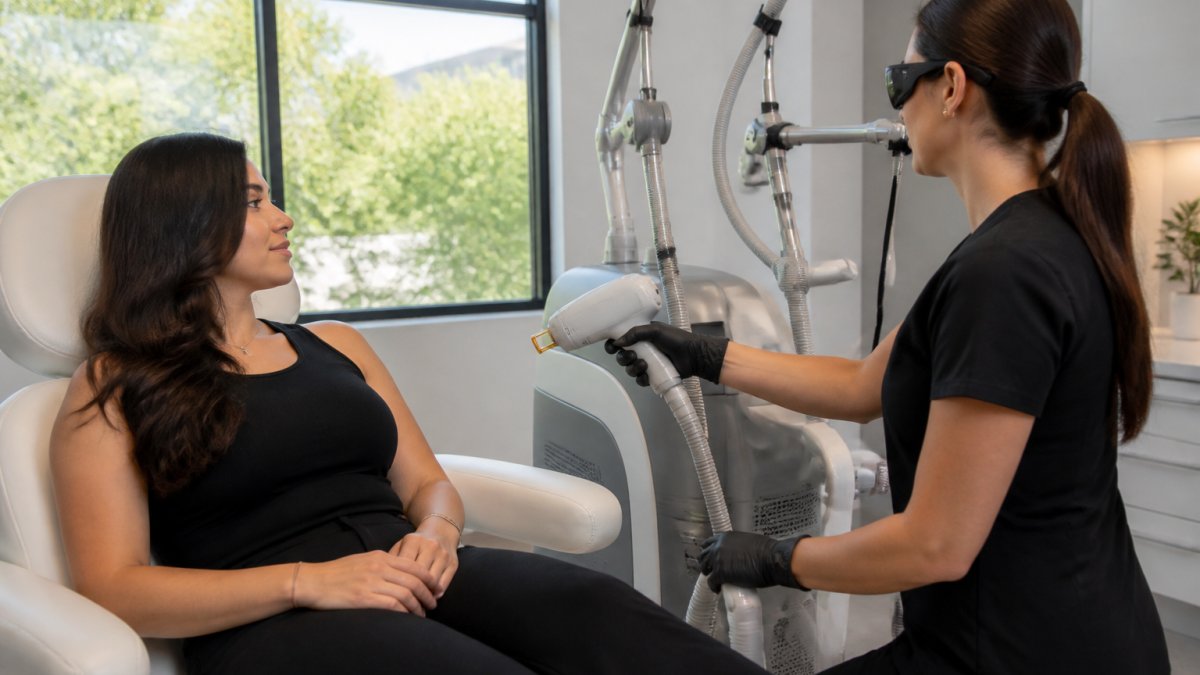
When evaluating medical aesthetics equipment investment, consider total cost of ownership over 5 years, not just purchase price.
Multi-modality platforms, systems handling multiple treatment types, offer better economics than single-purpose devices.
Reliability matters enormously. Equipment downtime directly reduces revenue.
Consider also the training and support ecosystem.
Equipment investment criteria:
- Calculate 5-year total cost of ownership (not just purchase price)
- Prioritise multi-modality platforms over single-purpose devices
- Evaluate reliability track records and support availability
6. Build Effective Aesthetic Clinic Marketing Strategies
Marketing efficiency directly impacts patient acquisition cost and practice growth.
An effective aesthetic clinic marketing strategy focuses on channels where your target patients actually search and make decisions.
Paid advertising can work, but only if targeted precisely. Broad awareness campaigns rarely generate profitable patient acquisition.
Referral systems often deliver the highest-quality patients at the lowest acquisition cost.
Content marketing, educational blog posts, treatment guides, before-and-after galleries, builds trust and improves search visibility.
Marketing efficiency actions:
- Focus on Google Search and Maps (local intent)
- Track cost per booking for each marketing channel
- Eliminate channels with acquisition costs above your target
7. Maximise Retail Product Sales and Consumables
Retail product sales, skincare, supplements, post-treatment products, often generate 15-25% of clinic revenue with minimal additional cost.
Strategic retail selection improves both margins and patient outcomes. Recommend products that genuinely enhance treatment results.
Focus on products with strong margins and genuine clinical benefit. Medical-grade skincare typically offers 50-60% margins.
Train your team to recommend products naturally during consultations and post-treatment.
Retail optimisation:
- Select 4-6 core products with strong margins and clinical relevance
- Train staff on product benefits and proper recommendations
- Position retail as part of the treatment protocol
- Track retail revenue per patient and per treatment type
The seven strategies above work together.
Start with whichever area feels most urgent.
Frequently Asked Questions
How can aesthetic clinics calculate profit margins by treatment type?
Start by tracking the direct cost of each treatment: consumables, energy use, and staff time. Divide gross profit (revenue minus direct costs) by revenue to find your gross margin percentage. For example, if a treatment generates $200 revenue with $50 in direct costs, your gross margin is 75%. Track this monthly by treatment type to identify your highest and lowest margin services. This data guides which treatments to promote and which to bundle strategically.
What’s the relationship between aesthetic clinic patient retention and profit margins?
Repeat patients cost 60-80% less to acquire than new ones and typically spend more over their lifetime. Retained patients also provide predictable revenue, improve capacity utilisation, and reduce marketing spend per appointment. Clinics with strong retention programmes (loyalty schemes, seasonal packages, reminder systems) see 20-30% higher net profit because existing patients book more frequently and accept higher-value treatment recommendations. Focus retention efforts on your highest-margin treatments to maximise this effect.
How does medical aesthetics equipment investment affect long-term profitability?
The right equipment increases treatment options, shortens appointment times, and improves clinical outcomes, all of which justify higher pricing and attract premium-paying patients. However, poor equipment selection wastes capital and creates idle capacity. Calculate the break-even point: divide total equipment cost (purchase, installation, training) by the profit per treatment. If a laser costs $50,000 and nets $100 per treatment, you need 500 treatments to break even. Choose multi-modality platforms that serve multiple revenue streams to reach break-even faster and improve overall clinic profitability.
Can small aesthetic clinics actually improve profit margins, or is this mainly for larger practices?
Small clinics often have higher profit margins than larger ones because they have lower overhead and more control over pricing and scheduling. The seven strategies work at any scale. Focus first on treatment mix optimisation and pricing strategy, these require no capital and generate immediate results. Then reinvest profits into targeted marketing and patient retention systems. Small clinics that master these fundamentals typically see 15-25% margin improvement within 12 months, often outpacing larger practices that are slower to adapt.