Blog Details
Last Updated: November 22, 2026
Quick Summary
Aesthetic clinic startup costs cover one-off spending before your first paying client, including premises and fit-out, equipment, licensing and insurance, legal fees, and opening stock. Equipment is usually the largest single share, but the many smaller items are where budgets most often fall short. A cash buffer for the first few months should also be included.
- Premises usually take the largest share after equipment, depending on location and site size.
- Build the equipment line from the full kit, including installation, training, servicing and consumables.
- Leaving out working capital is the mistake that catches most new clinics, since revenue lags early bills.
- Add a 10 to 15 percent contingency to the total startup figure and hold it in cash.
Table of Contents
- Premises, Lease and Clinic Fit-Out
- Medical and Aesthetic Equipment Costs
- Licensing, Insurance, Legal Fees and Initial Stock
- Aesthetic Clinic Operating Costs After Launch
- Building a Startup Budget Template and Business Plan
- Planning Your Next Step Toward Opening
- Frequently Asked Questions
Opening an aesthetic clinic is expensive, and the first budget most owners draw up leaves out something important. Premises, fit-out, licensing, insurance and opening stock all add up fast. (Source: Australian Commission on Safety and Quality in Health Care)
Here is the plain version: startup costs are the one-off money you spend before your first paying client walks in. Running costs come later, and we cover those further down.
Most owners find that the biggest surprise is not a single large item. It is the long list of smaller ones that never made the first spreadsheet.
- Lease deposit, rent in advance and legal review of the lease
- Fit-out, plumbing, electrical work and treatment room setup
- Clinical equipment and devices
- Registration, insurance and professional fees
- Opening stock of consumables and products
- Marketing, a booking system and the website
- A cash buffer for the first few months
A common mistake is building the budget around the device alone. Treat the device as one line in a wider plan.
Watch out: leaving out working capital is the mistake that catches most new clinics. Revenue often lags behind the first bills by several months.
Premises, Lease and Clinic Fit-Out
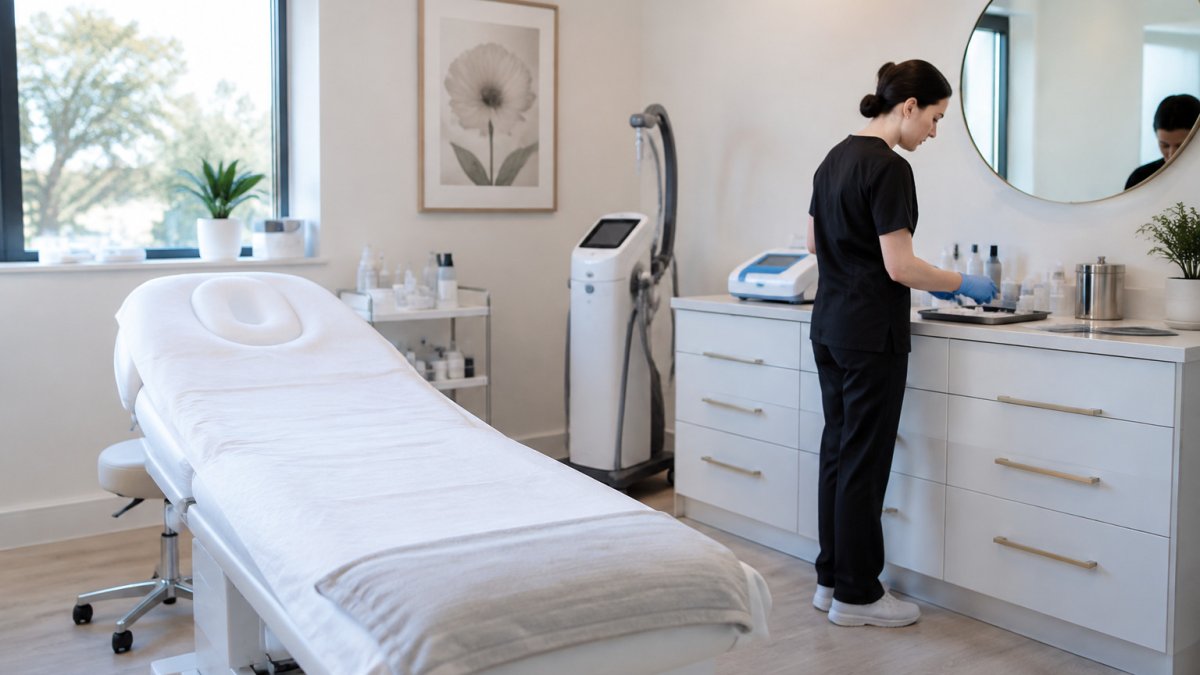
Premises usually take the largest share of setup money after equipment. Lease deposits and build-out costs vary widely and depend heavily on location and the size of the site.
Shared medical tenancies are a lower-cost route for a single-room practice. Ask whether the landlord’s insurance and compliance terms suit a clinical use before you sign anything.
Fit-out covers plumbing, lighting, cabinetry and a treatment room that meets clinical hygiene needs. Get at least two quotes and ask each builder to list what is excluded.
Medical and Aesthetic Equipment Costs
Equipment is where most of the budget goes, and prices vary widely by device type and capability. Equipment prices vary widely by device type and capability, and a single-modality setup can cost far less than a multi-platform system. A small clinic launching with one or two treatment modalities will typically spend less than a clinic opening with a full multi-platform suite, so the range is only useful once you anchor it to the treatments you actually plan to offer in year one.
What sits inside the equipment line
A device quote rarely reflects the full cost of putting it into service. Build the line item from these components:
- The device itself, including any applicators, handpieces or consumable kits supplied at handover
- Installation, delivery and commissioning, plus any electrical or plumbing work the unit requires
- Operator training, which is sometimes bundled and sometimes charged per head
- Warranty terms and what happens after the warranty expires
- A servicing contract or pay-per-service arrangement, including consumable parts
- Consumables the device burns through per treatment (gels, tips, filters, cryogen)
- Software licences or subscription fees if the device reports to a booking or clinical system
- Insurance premium movement, since some policies price on the devices you hold
A multi-modality platform only pays off if your team uses its full range. If two of the four modalities sit idle, the per-treatment cost of the device rises sharply and the payback period stretches. Our team at DermTech Devices can walk you through which configurations suit a small team, and our Aesthetic Equipment for New Clinics: 2026 Checklist lists the devices most launches need.
Buying outright versus leasing and financing
The upfront cash requirement is the obvious difference, but the trade-offs run further than that. Our guide on how you can finance aesthetic laser equipment walks through the financing options in more detail.
Buying outright means the full price leaves your account before the first treatment is sold.
Leasing or equipment finance spreads the cost across a fixed term, usually with a deposit and monthly repayments.
A common pattern is to finance the large capital device and buy the smaller consumable-driven items outright, so the fixed monthly commitment stays predictable while the flexible costs scale with bookings.
Watch out: a lease or finance agreement signed before you have a realistic treatment-volume forecast can leave you paying for capacity you cannot fill.
When you compare quotes, ask about training, warranty, servicing and what happens if the supplier stops trading.
The equipment line item is easier to plan when you see the cost components side by side and compare the two main ways of paying for the device.
| Cost component | What it covers | Budget note |
|---|---|---|
| Device and applicators | Device plus handpieces or kits at handover | Quote the full kit, not the base unit |
| Installation and training | Delivery, commissioning, electrical or plumbing work, operator training | Training is sometimes charged per head |
| Servicing and consumables | Service contract plus per-treatment gels, tips, filters, cryogen | Recurring cost that rises with treatment volume |
| Buying outright | Full price paid upfront, you own the asset | Cash leaves before the first treatment is sold |
| Leasing or financing | Fixed term with deposit and monthly repayments | Preserves working capital; total cost is higher |
| Idle modalities | Unused parts of a multi-platform system | Raises per-treatment cost and stretches payback |
Licensing, Insurance, Legal Fees and Initial Stock
Registration and licensing requirements for aesthetic treatments vary by state or territory and by practitioner type. Check the current requirements with the official source before you budget for them, since fees and renewal terms change.
Professional indemnity insurance and public liability cover are essential (Australian Health Practitioner Regulation Agency). Get quotes early, because premiums depend on the treatments you offer.
Initial stock may include consumables and products, along with the first order of single-use items. Order to your realistic first-month volume rather than stocking up, since expiry dates limit how long products keep. Legal review of your lease and contracts is another cost worth including.
Aesthetic Clinic Operating Costs After Launch
Startup money gets you open. Operating costs keep you open. Most startup budgets stop at the opening date, which is why so many clinics that look fully funded on paper run into trouble in month three. The fix is to build a monthly operating model alongside the startup budget, not after it.
The monthly overhead lines to budget for
Group the recurring costs so you can see which ones are fixed and which move with bookings.
Fixed monthly costs stay roughly the same whether you treat ten clients or a hundred:
- Rent and outgoings, including any percentage rent or turnover clause in the lease
- Base wages and superannuation for reception, nursing and clinical staff
- Professional indemnity and public liability premiums, usually paid annually but best divided by twelve
- Software subscriptions for booking, clinical records, payments and marketing
- Equipment finance or lease repayments
- Accounting, bookkeeping and any practice-management retainer
- Utilities, waste disposal and clinical waste collection
Variable costs rise with treatment volume:
- Consumables and single-use items per treatment
- Injectable and skincare product used per client
- Payment processing fees, which take a percentage of every transaction
- Marketing spend, if you scale it with bookings
- Laundry, linen and cleaning tied to room usage
A common pattern is for owners to budget the fixed lines accurately and underestimate the variable ones, because variable costs only show up once the clinic is busy. Build them into the model from the start.
A worked break-even model
Break-even is the point where the contribution from each treatment covers your fixed monthly costs. The mechanics are simple, but they only work if you use real numbers. To measure whether a device will pay back its cost, see the aesthetic device ROI guide for small clinics.
- Add up your total fixed monthly costs. Call this F.
- Work out the average revenue per treatment, then subtract the variable cost of delivering that treatment. The result is your contribution per treatment. Call this C.
- Divide F by C. The answer is the number of paid treatments you need each month to break even.
For example, if fixed monthly costs are $30,000 and each treatment contributes $150 after consumables and payment fees, you need 200 treatments a month, roughly ten a working day, before you cover your bills. If your realistic booking rate is lower than that, the model tells you before you sign the lease, not after.
Run the same calculation at low, typical and high treatment volumes. The gap between the low case and the break-even number is the size of the cash buffer you need.
Hidden and contingency costs
The costs that sink new clinics are rarely the ones on the equipment quote. They are the ones nobody listed. Build a checklist and price each item before you open:
- Lease deposit and rent in advance, plus any make-good obligation at the end of the term
- Utility upgrades, additional power circuits or plumbing changes the fit-out did not cover
- Equipment downtime and rental cover while a device is being repaired
- Clinical and general waste disposal contracts, which are often priced separately from general waste
- Payment processing fees and chargeback exposure
- Insurance excess if a claim is made
- Replacing stock that expires before it sells
- A contingency of 10 to 15 percent on the total startup figure, held in cash rather than committed to fit-out
Build a buffer of several months of fixed costs so a slow first quarter does not force a sale or a shutdown. The buffer is not a luxury; it is the difference between a clinic that survives a quiet launch and one that does not.
Building a Startup Budget Template and Business Plan
A simple startup budget template has three columns: item, low estimate and high estimate. Fill in every line, then add a 10 to 15 percent contingency. Keep a note of the assumption behind each figure so you can revise it once you have real quotes.
Setting Up Your Business Plan Financials
Lenders and investors want to see projected cash flow, not just a list of costs. Show the first 12 months month by month, including the point you expect to break even. Treat the projections as estimates and update them as your bookings and actual costs come in.
Planning Your Next Step Toward Opening
Start by listing every cost in the breakdown above, then replace the guesses with real quotes. Once the numbers hold together, you can choose your equipment and book a conversation about configurations. Partner with us at DermTech Devices to match your budget to the right device setup.
Frequently Asked Questions
How much does it cost to open an aesthetic clinic in Australia?
The total depends heavily on clinic size, location, the number of treatment rooms and the equipment you choose. Costs are shaped by premises, fit-out, devices, licensing, insurance and the working capital needed before revenue arrives. DermTech Devices does not publish fixed pricing for its systems, so pricing depends on quantity, configuration and delivery. Request a written quote and build your own budget from those figures, adding a contingency margin for setup overruns.
What are the biggest startup costs for an aesthetic clinic?
For most new clinics the largest items are the lease and fit-out, followed by medical and aesthetic equipment. Licensing, insurance and professional fees come next, then initial stock such as skincare and consumables. Working capital to cover the first several months of rent, wages and marketing is often underestimated. Listing each category separately makes it easier to see which costs can be phased in later.
How much working capital does a new aesthetic clinic need?
Working capital covers the gap between opening and the point where treatment income reliably covers your monthly costs. The required amount depends on your rent, staffing, insurance and how quickly you build a client base. Many owners plan for several months of operating costs in reserve. Build a month-by-month cash flow forecast to estimate this figure for your own clinic.
Is it cheaper to lease or buy aesthetic equipment?
Leasing or financing can reduce the upfront outlay, but it adds ongoing repayments that count toward your operating costs. Buying outright can lower total cost over time if the equipment is well used and well maintained. Compare the total repayment schedule, servicing terms and warranty coverage before deciding. Ask the supplier for full details of its terms when you request a quote.