Blog Details
Table of Contents
- Why Aesthetic Clinics Are Moving Beyond Single-Function Devices
- Multi-Modality Laser Platforms: The Core Upgrade
- Next-Generation Skin Analysis and Diagnostic Tools
- Evaluating Medical Laser Supplier Support
- Understanding TGA Medical Device Registration Requirements
- Aesthetic Clinic Equipment Leasing vs Buying
- Calculating ROI: Cost-Benefit Analysis for New Technology
- Common Integration Challenges and How to Avoid Them
- Frequently Asked Questions
Last Updated: September 5, 2026
Why Aesthetic Clinics Are Moving Beyond Single-Function Devices
The days of filling a treatment room with five separate machines, each dedicated to one job, are ending. A growing number of clinic owners are discovering that a high tech medical alternative for aesthetic clinics, built around consolidated multi-modality platforms, delivers better clinical outcomes and a healthier balance sheet than the piecemeal approach. The shift is driven by economics as much as by technology: fewer devices means less floor space, simpler staff training, and a single maintenance contract to manage. (Source: Therapeutic Goods Administration (TGA) regulations)
At DermTech Devices, we have spent years helping dermatologists and aesthetic practitioners navigate this transition. The core insight is that modern platforms are not simply smaller versions of older equipment. They represent a different philosophy of treatment, one where a single console can address pigmentation, vascular lesions, skin tightening, and textural concerns through interchangeable handpieces and adjustable wavelengths. This consolidation is what makes the technology a genuine alternative rather than just another device purchase.
The pressure to upgrade is real. Patients arrive with more knowledge and higher expectations than ever, and they compare outcomes across clinics before booking. A practice limited to one or two treatment modalities will struggle to meet those expectations. Below, we will walk through the specific technologies, the regulatory landscape, and the financial modelling that should inform your decision.
Multi-Modality Laser Platforms: The Core Upgrade
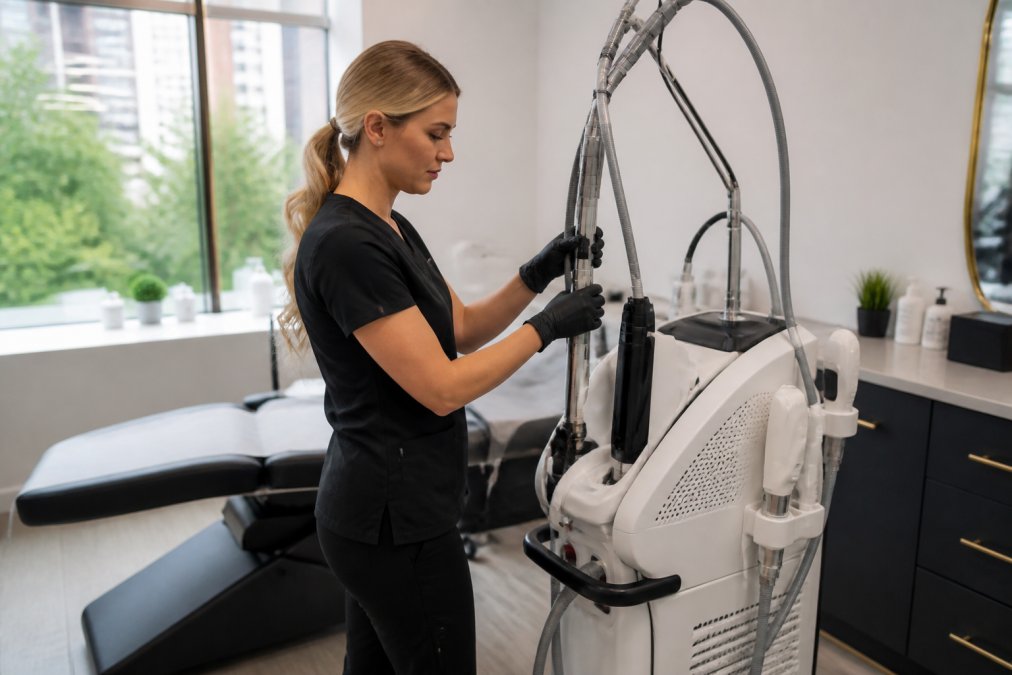
A multi-modality laser platform is a single system that combines multiple wavelengths and delivery modes, allowing one device to perform a broad range of treatments. This is the central high tech medical alternative for aesthetic clinics that have historically relied on separate machines for laser resurfacing, vascular therapy, and hair removal.
The practical advantages extend beyond the treatment room. Staff training is simplified because your team learns one interface rather than several. Consumables and maintenance are consolidated under a single service agreement. And when a new capability is released, it is often a software update or a new handpiece rather than a new capital purchase.
Consolidating Treatments into One System
For a clinic weighing this shift, the question is not whether consolidation works, but how far it can stretch. Most modern platforms cover the core aesthetic treatments: intense pulsed light for photorejuvenation, Nd:YAG for vascular and pigmented lesions, and fractional resurfacing for texture and tone. Some platforms now integrate radiofrequency for skin tightening as well.
The financial logic is compelling. A single multi-modality platform typically occupies the footprint of one treatment room and requires one round of staff certification. For smaller practices, this can be the difference between offering a full menu of treatments and turning patients away. For larger centres, it frees capital that would otherwise be tied up in redundant equipment.
A common mistake is choosing a platform based on the number of advertised wavelengths rather than the clinical outcomes you actually want to deliver. A device that does everything superficially will not satisfy patients who expect results. Match the platform to your treatment plan, not the other way around.
Next-Generation Skin Analysis and Diagnostic Tools
The second pillar of the modern aesthetic clinic is objective skin analysis. Traditional assessment relies on the clinician’s eye and the patient’s own description, both of which are subjective and difficult to track over time. Next-generation systems use multi-spectrum imaging to capture what the naked eye cannot see, from subsurface pigmentation to vascular patterns and collagen density.
These diagnostic tools are what separate a reactive practice, one that treats complaints as they arise, from a proactive practice that builds treatment plans around measurable data. Skin analysis is not merely a nice-to-have; it is becoming the standard of care in clinics that want to demonstrate treatment efficacy and retain patients through visible, documented progress.
Using Data to Drive Treatment Plans
The value of objective data becomes clear when a patient returns for their third session. With a high-resolution image from their first visit on screen, you can point to specific changes in pigmentation or texture. That visual proof is far more persuasive than a verbal assurance that progress is being made.
This data-driven approach also supports better clinical decisions. When a skin analysis system reveals that a patient’s primary concern is vascular rather than pigmentary, the clinician can select the appropriate wavelength on the multi-modality platform with confidence. The result is fewer wasted sessions and higher patient satisfaction. Clinics that adopt this workflow often find that their case acceptance rates improve because patients can see, in concrete terms, what the proposed treatment will address.
Evaluating Medical Laser Supplier Support
The quality of the device matters, but the quality of the supplier matters just as much. When you are evaluating medical laser supplier support, the critical question is simple: what happens after installation? Many practices have been burned by suppliers who disappear once the sale is complete, leaving staff to troubleshoot equipment failures alone.
A reliable supplier should offer structured, ongoing training that extends beyond a single demonstration day. Your team needs to feel confident operating the device, troubleshooting common issues, and explaining treatments to patients. Ask about response times for service calls, the availability of loaner equipment, and whether technical support is staffed by people who understand clinical workflows.
Before signing, ask for references from practices of a similar size and scope to yours. A supplier who can connect you with a clinic that has run the same platform successfully for several years is demonstrating confidence in their after-sales support.
The supplier’s role should be that of a long-term partner in your practice’s growth, not a one-time vendor. This is particularly true for clinics that plan to expand their service offerings over time. A supplier who understands your business goals can recommend upgrades and additional training as your needs evolve.
Understanding TGA Medical Device Registration Requirements
Any medical device used in an Australian aesthetic clinic must comply with the regulatory framework administered by the Therapeutic Goods Administration. Understanding TGA medical device registration requirements is essential before you commit to a purchase, as the legal responsibility for using a compliant device rests with the clinic, not just the supplier.
The TGA classifies medical devices based on the level of risk they pose to patients and users. Laser and IPL systems for aesthetic use typically fall into the higher-risk categories, which means they must be included in the Australian Register of Therapeutic Goods before they can be legally supplied. You should verify that any device you are considering is listed on the register, and you can confirm this through the TGA’s publicly searchable ARTG database.
Your supplier should be able to provide documentation demonstrating compliance. If they cannot, or if they are vague about the device’s regulatory status, treat that as a significant red flag. Operating a non-compliant device can expose your clinic to legal liability and, more importantly, put your patients at risk. The regulatory status of a device is not a formality; it is a fundamental safety checkpoint.
Aesthetic Clinic Equipment Leasing vs Buying
The decision between aesthetic clinic equipment leasing vs buying is one of the most consequential financial choices a practice will make. Each option has distinct advantages, and the right answer depends on your clinic’s cash flow, growth trajectory, and tax position.
Leasing typically requires less upfront capital, which is attractive for new or expanding practices. It also provides a predictable monthly expense and often includes maintenance within the agreement. The downside is that over the full life of the equipment, leasing usually costs more than buying outright. For practices that want to stay on the leading edge of technology, however, leasing offers a clear path to upgrading when the lease term ends.
Buying, by contrast, builds an asset on your balance sheet. Once the device is paid for, your ongoing costs are limited to maintenance and consumables. This makes buying more cost-effective over the long term for established practices with stable treatment volumes. The trade-off is that you are responsible for the device’s performance and resale value.
| Option | Upfront Cost | Best For | Key Consideration |
|---|---|---|---|
| Leasing | Lower | New or expanding clinics | Higher total cost over time |
| Buying | Higher | Established practices | Asset ownership and resale value |
Calculating ROI: Cost-Benefit Analysis for New Technology
Before any equipment purchase, you need a clear picture of how the investment will pay for itself. Calculating ROI for a new platform involves more than comparing the purchase price to projected revenue. You must account for consumables, maintenance, staff training time, and the opportunity cost of the capital being deployed.
A practical starting point is to estimate how many additional treatments per week the new technology will enable. Consider both existing patients who will upgrade their treatment plans and new patients attracted by your expanded service menu. The revenue from those treatments, minus the cost of consumables and the amortised equipment cost, gives you a monthly contribution to overhead. This is the figure that tells you how quickly the device will pay for itself.
The comparative efficacy data available for established platforms gives you a basis for these projections. When a platform has a documented track record of delivering consistent results across multiple indications, you can be more confident in your revenue forecasts. Research on patient satisfaction and treatment outcomes in aesthetic medicine supports the view that documented results drive both retention and referrals.
A multi-modality platform that is used for only a few treatments per week is a poor investment, regardless of its capability. The goal is to build a treatment menu that keeps the device active, which is where the combination of a versatile platform and a strong skin analysis workflow proves its worth.
Common Integration Challenges and How to Avoid Them
The most sophisticated equipment in the world will not improve your practice if it sits idle in a corner. Integration challenges typically fall into three categories: workflow disruption, staff resistance, and patient education. Each one is predictable, and each one has a solution.
Workflow disruption happens when the new device does not fit cleanly into your existing appointment structure. If a treatment that should take 30 minutes is scheduled in a 20-minute slot, the whole day falls behind. The fix is to build buffer time into your schedule during the first few weeks of using new equipment, allowing your team to become proficient without pressure.
Staff resistance is often rooted in fear of the unknown. A nurse who has mastered an older device may feel threatened by a new platform with unfamiliar controls. Comprehensive training, delivered by the supplier and reinforced by your clinical lead, is the answer. When staff feel confident, they become advocates for the new technology rather than obstacles to its adoption.
Patient education is the final piece. Patients need to understand why the new technology is better for them and what they should expect during and after treatment. Clear communication, supported by the objective data from your skin analysis system, turns the introduction of new equipment into a marketing opportunity rather than a source of confusion.
The practices that navigate these challenges successfully share a common trait: they treat technology adoption as a project, not a purchase. They assign a clinical champion, they invest in training, and they communicate with patients at every step. This approach, supported by a supplier who remains engaged after installation, is the difference between a device that transforms a practice and one that gathers dust.
For clinics ready to make this transition, the first step is a conversation about your treatment goals and your patient base. The team at DermTech Devices brings the perspective of a founder who has worked as a Registered Nurse for over 19 years, which means the advice you receive is grounded in clinical reality. Our advanced multi-modality laser platforms and next-generation skin analysis systems are designed to enhance treatment capabilities and support long-term practice growth. Guidance on selecting medical devices for clinical practice
Choosing the right technology for your aesthetic clinic is a decision that affects your patients’ outcomes and your practice’s financial health for years to come. The move toward consolidated, multi-modality platforms represents a genuine shift in how modern clinics operate, but the technology only delivers value when it is matched with the right supplier, the right training, and a realistic financial plan. Partner with us at DermTech Devices, and we will help you evaluate whether a high tech medical alternative for aesthetic clinics is the right step for your practice, with systems built for performance, reliability, and safety.
Frequently Asked Questions
What criteria should aesthetic clinics use when evaluating medical device suppliers?
Focus on the supplier’s clinical support and training depth, not just the device price. Ask about installation procedures, ongoing technical support response times, and whether training is a one-day event or an ongoing partnership. Check that the supplier’s team understands your clinical workflow. Review their maintenance plans and warranty terms. A supplier that offers expert-led training and responsive service will ensure your staff use the equipment effectively, protecting your investment and improving patient outcomes.
How do TGA regulations impact the selection of aesthetic medical devices?
The Therapeutic Goods Administration (TGA) regulates medical devices in Australia. Any device used for a medical purpose, including many aesthetic lasers, must be included in the Australian Register of Therapeutic Goods (ARTG). Verify the device’s ARTG inclusion before purchase to ensure it is legally supplied and meets Australian safety and quality standards. Using an unregistered device can create legal liability for your clinic and compromise patient safety. A reputable supplier will confirm registration status for you.
What are the benefits of multi-modality laser platforms for small to medium clinics?
For smaller clinics, a multi-modality platform offers a significant return on investment by replacing several single-purpose machines with one system. This reduces your initial capital outlay, saves valuable floor space, and simplifies staff training to a single interface. It allows you to offer a wider range of treatments, such as rejuvenation, pigmentation, and vascular lesion therapy, from one device, improving patient retention by meeting more of their needs on-site.
Is it better to lease or buy aesthetic clinic equipment?
Leasing preserves your working capital and provides predictable monthly expenses, which can be beneficial for cash flow, but often results in higher total costs over time. Buying requires a larger upfront investment but offers the lowest long-term cost of ownership and builds an asset for your practice. Your choice depends on your clinic’s financial position and growth strategy. Consider the device’s expected lifespan and your need for the latest technology when deciding.