Blog Details
Table of Contents
- Medical Grade Laser Platforms: What Clinic Owners Need to Know
- Quick Comparison: Key Medical-Grade Laser Platforms
- New vs. Used Medical Laser Equipment: What’s Right for Your Practice
- Multi-Modality Laser Platform Comparison: Single vs. Multi-Purpose Systems
- Laser Equipment Financing for Clinics: Payment Plans and Cost Structures
- TGA ARTG Medical Device Registration: Compliance and Verification
- Technical Specifications and Clinical Efficacy: Power Output, Wavelength, and Pulse Duration
- Total Cost of Ownership Analysis: Beyond the Purchase Price
- Frequently Asked Questions
Last Updated: September 30, 2026
Medical Grade Laser Platforms: What Clinic Owners Need to Know
Selecting the right medical grade laser platforms for sale is about investing in your practice’s future. The difference between a smart purchase and a costly mistake comes down to understanding what you’re buying, how it fits your workflow, and what support you’ll receive.
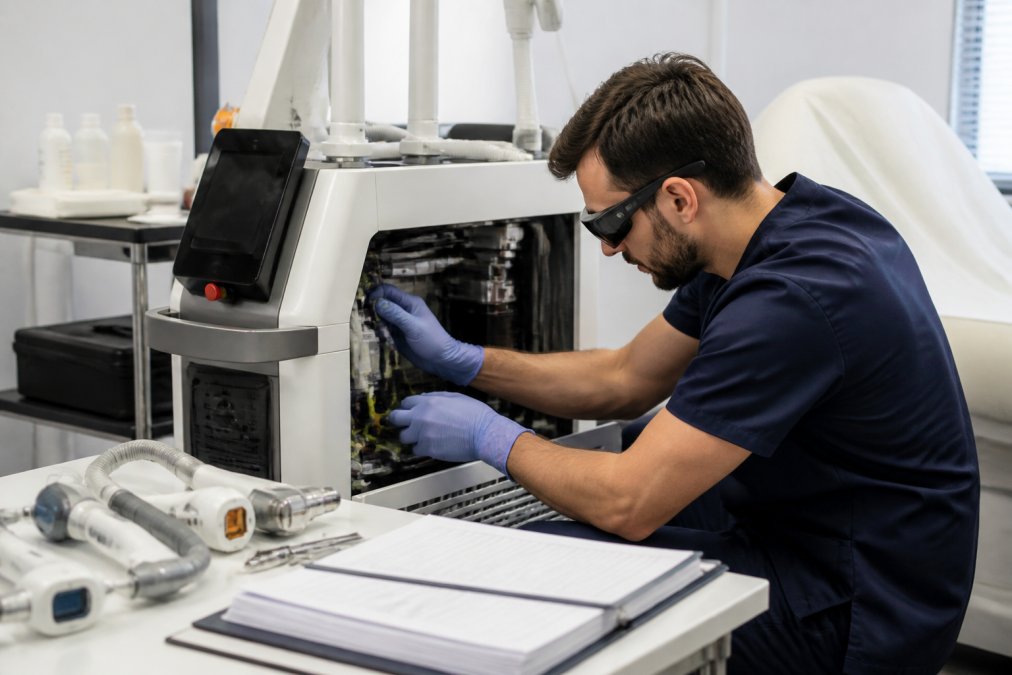
Most clinics prioritise price over features and support, backwards thinking. The real cost of ownership, maintenance, training, and compliance often exceeds the initial purchase price by 200-300% over five years.
This guide covers new versus used equipment, multi-modality design, financing, regulatory requirements, and technical specifications. You’ll learn what questions to ask suppliers and how to calculate ROI.
Quick Comparison: Key Medical-Grade Laser Platforms
The medical-grade laser market includes platforms ranging from single-wavelength specialty systems to versatile multi-modality units. The choice depends on your patient volume, treatment mix, and capital budget.
Feature Comparison Table
| Platform Type | Wavelength Range | Best For | Typical Applications | Key Consideration |
|---|---|---|---|---|
| Multi-modality aesthetic laser | 532nm-1064nm | Full-service aesthetic clinics | Hair removal, skin rejuvenation, pigmentation | Highest versatility, requires operator training |
| Class IV therapeutic laser | 600-1100nm | Pain management, rehabilitation | Deep tissue therapy, wound healing | High power output, professional training mandatory |
| Cold laser (LLLT) systems | 600-1000nm | Chronic pain, hair regrowth | Non-thermal tissue stimulation | Lower cost entry, longer treatment times |
| Specialty platforms | Single wavelength | Focused treatment needs | Specific indications (e.g., vascular lesions) | Limited versatility, lower investment |
New vs. Used Medical Laser Equipment: What’s Right for Your Practice
Used equipment saves 40-60% upfront but risks hidden maintenance costs, missing records, and obsolete software. New equipment costs more but includes warranty, current firmware, and documented history.
Used platforms work if the previous owner maintained detailed logs, the unit was professionally refurbished, and you buy from a reputable distributor. Red flags: missing records, cosmetic damage, or sellers unwilling to provide calibration proof.
New equipment includes 1-3 year warranty, training, and software updates. For 5+ year operation, new equipment often delivers better total cost of ownership despite higher upfront cost.
Multi-Modality Laser Platform Comparison: Single vs. Multi-Purpose Systems
Multi-modality platforms combine multiple wavelengths in one system, treating hair removal, vascular lesions, pigmentation, and resurfacing without equipment swaps. Single-modality systems excel at one job but require separate devices.
Multi-modality platforms justify higher investment through increased versatility and throughput, replacing 2-3 single-purpose machines. Tradeoff: you pay for unused capabilities and operators face a steeper learning curve.
Single-modality systems work for specialized practices (vascular-focused or hair removal-only) and offer lower-cost entry for new practices.
For multi-practitioner centers offering diverse treatments, multi-modality platforms pay for themselves through increased case mix and appointment efficiency.
Laser Equipment Financing for Clinics: Payment Plans and Cost Structures
Medical-grade laser platforms cost $20,000-$150,000 depending on wavelength, power, and handpieces. Financing options: outright purchase, lease, or equipment-as-a-service.
Outright purchase requires capital but provides ownership and tax depreciation benefits. Works if you have cash reserves or access to business loans.
Lease agreements (3-5 years) include maintenance and updates with lower monthly payments.
Before committing to financing, stress-test your revenue projections. Ask your supplier for case studies showing patient volume and revenue outcomes from similar practices. A realistic assessment of your market demand prevents over-investing in equipment you can’t fully utilise.
TGA ARTG Medical Device Registration: Compliance and Verification
In Australia, medical-grade laser platforms must be listed on the TGA ARTG before legal use. ARTG registration is the first checkpoint in a broader compliance framework clinic owners must understand.
What to verify before purchase:
Your practice’s ongoing compliance obligations:
Red flags in supplier documentation:
Non-compliance is not a minor administrative issue. The TGA has enforcement powers including equipment seizure, practice closure orders, and referral to law enforcement for serious breaches. Your practice’s reputation and your personal professional registration are at stake.
Technical Specifications and Clinical Efficacy: Power Output, Wavelength, and Pulse Duration
Clinical effectiveness depends on three core specifications: wavelength, power output, and pulse duration. Understanding how these interact is essential for consistent results.
Wavelength: Targeting tissue chromophores
Power output: Speed, efficacy, and safety trade-offs
- 10-20W systems, Entry-level platforms. Suitable for low-to-moderate patient volume, slower treatment times, lower upfront cost. Adequate for hair removal and vascular lesions if parameters are optimised. Require longer pulse durations or multiple passes to achieve efficacy.
- 30-50W systems, Mid-range platforms. Faster treatment times, better patient throughput, suitable for busy aesthetic practices. Can deliver efficacy across hair types and skin tones with proper parameter selection.
- 50W+ systems, High-power platforms. Fastest treatment times, highest patient throughput, capable of treating resistant hair and deep vascular lesions. Require advanced cooling systems (water-cooled handpieces, integrated chilling) and operator expertise to avoid burns or post-inflammatory hyperpigmentation.
Pulse duration: Precision versus depth
- Short pulses (microseconds, 10-100 µs), Concentrate energy in a very brief window. Ideal for targeting small, discrete structures like melanin granules in pigmented lesions or individual red blood cells in vascular lesions. Produces sharp, precise effects with minimal collateral damage. Used for pigmentation removal and vascular lesion treatment. Higher risk of epidermal injury if parameters are not carefully controlled.
- Medium pulses (milliseconds, 10-100 ms), Balance between precision and depth. Suitable for hair removal, where you want to heat the hair follicle and surrounding stem cells without excessive epidermal heating. Most hair removal systems operate in this range.
- Long pulses (milliseconds, 100+ ms), Distribute energy over time, allowing deeper tissue heating with less surface intensity. Used in pain management and deep tissue therapeutic applications (Class IV therapeutic lasers). Lower risk of surface burns but slower to achieve effect.
How specifications interact: Matching to clinical outcomes
- Hair removal on dark skin, Requires 1064nm (deep penetration, lower epidermal melanin absorption), medium pulse duration (10-50 ms), and sufficient power (30W+) to heat follicles efficiently without prolonged exposure that risks epidermal injury.
- Vascular lesion treatment, Requires 532nm or 1064nm (depending on lesion depth), short pulse duration (microseconds to milliseconds) to selectively heat blood vessels, and moderate power (20-40W) to achieve coagulation without surrounding tissue damage.
- Pigmentation removal, Requires 532nm or 755nm, very short pulse duration (nanoseconds to microseconds) for selective photothermolysis of melanin, and variable power depending on lesion size and depth.
- Pain management (LLLT), Requires 600-1000nm wavelength, continuous or long-pulse mode, low power (1-10W), and longer treatment times (15-30 minutes) to achieve photobiomodulation effects.
Evaluating supplier claims:
- Peer-reviewed publications, Studies demonstrating the platform’s performance on your target indications and skin types. Be sceptical of claims not supported by published evidence.
- Treatment parameter ranges, The specific wavelength, power, pulse duration, and frequency settings recommended for each indication. Platforms with narrow parameter windows are less forgiving of operator variation.
- Adverse event rates, Published or documented rates of burns, scarring, post-inflammatory hyperpigmentation, or other complications. Compare these across platforms; lower rates indicate better safety margins.
- Case studies from similar practices, Real-world outcomes from clinics treating similar patient populations. A platform that works well on light skin may not perform as well on darker skin without careful parameter adjustment.
Total Cost of Ownership Analysis: Beyond the Purchase Price
The sticker price of a medical-grade laser platform is only the first cost. Total cost of ownership over five years includes maintenance contracts, replacement handpieces, calibration services, training, software updates, and facility modifications (electrical upgrades, cooling systems, dedicated treatment space).
- Annual maintenance contract costs
- Replacement handpiece or applicator costs
- Calibration and safety certification fees
- Software licensing or update fees
- Training costs for new staff
Frequently Asked Questions
What makes a laser platform ‘medical grade’ and how do I verify it?
Medical-grade laser platforms meet strict safety and efficacy standards set by the Therapeutic Goods Administration (TGA). Verification requires checking the ARTG (Australian Register of Therapeutic Goods) listing to confirm the device is registered for its intended clinical use. Look for devices with documented wavelength specifications, power output ratings, and clinical validation data. DermTech Devices partners with globally recognised medical technology brands to ensure all platforms meet these rigorous standards for performance and reliability.
How does multi-modality laser technology improve clinical outcomes?
Multi-modality laser platforms deliver multiple wavelengths and pulse durations from a single system, enabling treatment of diverse skin concerns, from pigmentation and vascular lesions to skin resurfacing and body contouring, without purchasing separate devices. This versatility allows practitioners to address more patient needs with precision-engineered solutions, optimise treatment planning through objective skin analysis, and improve clinical efficacy by selecting the exact parameters for each condition. For multi-practitioner centres, this means expanded service offerings and more consistent results across your team.
What financing options are available for medical-grade laser platforms?
Clinic owners can access financing through several pathways: equipment leasing (monthly payments spread over 3-5 years), equipment financing with flexible payment schedules, or outright purchase. Financing terms depend on equipment cost, your clinic’s financial profile, and the supplier’s offerings. Contact DermTech Devices or your equipment provider for current financing options tailored to your practice size and budget.
What is the total cost of ownership for a medical-grade laser platform over 5 years?
Total cost of ownership includes the purchase or financing cost, maintenance and calibration, replacement parts (handpieces, filters), staff training, safety equipment (laser safety glasses), and potential downtime. Maintenance contracts typically cover servicing and spare parts. Budget for annual calibration to ensure consistent power output and clinical efficacy. Refurbished platforms may have lower upfront costs but may carry shorter warranty periods. Request a detailed TCO breakdown from your supplier, DermTech Devices can walk you through expected costs for your specific platform and practice size.
How do I know if a laser platform is TGA ARTG registered and what does that mean for my clinic?
Check the TGA’s ARTG database online by searching the device name and manufacturer. An ARTG listing confirms the device meets Australian regulatory requirements for safety, performance, and intended use. For your clinic, this means the platform has undergone rigorous assessment and is legally approved for clinical use in Australia. Using non-registered devices exposes your practice to liability and regulatory action. DermTech Devices ensures all platforms are ARTG-listed before supply, providing compliance documentation and ongoing support to keep your clinic’s regulatory standing secure.
Selecting the right medical-grade laser platforms for sale requires balancing clinical capability, financial sustainability, and regulatory compliance. The best equipment is the one your team can operate consistently, your practice can afford to maintain, and your patients will benefit from. Partner with us to find the right solution for your practice’s needs.