Blog Details
Table of Contents
- Why Aesthetic Staff Training Matters to Your Practice
- Building an Aesthetic Staff Onboarding Checklist
- Developing an Aesthetic Clinic Staff Competency Assessment Framework
- Laser Safety Training for Aesthetic Staff
- Structured Clinical Skills and Injection Protocol Training
- Improving Aesthetic Clinic Staff Retention Through Training
- Measuring Training Effectiveness and Practice Growth
- Implementing Your Aesthetic Staff Training Programme
- Frequently Asked Questions
Last Updated: October 10, 2026
Why Aesthetic Staff Training Matters to Your Practice
Aesthetic staff training directly impacts patient safety, treatment outcomes, and your bottom line. When your team understands injection protocols, laser safety, and patient communication, complications drop and patient satisfaction rises. That’s not theory, it’s what separates thriving aesthetic practices from those struggling with inconsistent results and staff turnover. (Source: Australian Health Practitioner Regulation Agency (AHPRA) guidelines)
Practices that invest in structured aesthetic staff training often see improvements in patient retention and revenue. Your staff are the face of your clinic, confident staff build patient confidence.
The challenge is choosing the right approach and tying it together. Without a framework, you end up with gaps: one practitioner knows laser safety, another doesn’t.
This guide covers the complete picture: how to build an onboarding system that sticks, assess competency objectively, train for safety and confidence, retain your best people, and measure whether your training investment is actually paying off.
Building an Aesthetic Staff Onboarding Checklist
Structured onboarding sets expectations, builds confidence, and prevents costly errors. Many clinics skip this step or treat it as paperwork, which is a mistake.
Your onboarding checklist should cover facility orientation, emergency procedures, equipment location, software systems, and clinical areas specific to aesthetic medicine.
Clinical orientation and equipment familiarisation
New staff need hands-on familiarity with every device. Walk them through power settings, safety interlocks, maintenance routines, and common error messages.
Create a structured process: observe a treatment, then supervise basic tasks under guidance, and document progress. Many clinics assume competency too quickly, leading to preventable mistakes.
Include a practical checklist for each device: identifying the correct handpiece, understanding power settings and pulse duration, troubleshooting common faults, and performing daily maintenance.
Patient safety and communication protocols
Develop a standard intake script covering medical history, allergies, medications, and previous treatments. Train staff to ask follow-up questions and flag concerns before the practitioner sees the patient.
Establish clear escalation pathways for pain during treatment and adverse reactions. Your staff should know these answers without hesitation.
Create a patient communication template for pre-treatment instructions, post-treatment care, managing expectations, and handling complaints. Consistency builds trust and reduces disputes.
| Onboarding Component | Timeline | Responsibility | Success Indicator |
|---|---|---|---|
| Facility orientation | Day 1 | Manager | Staff can locate emergency equipment and procedures |
| Equipment familiarisation | Week 1-2 | Senior practitioner | Staff demonstrate safe device operation |
| Patient safety protocols | Week 1 | Manager | Staff verbally confirm escalation procedures |
| Software and booking systems | Week 1 | Administrator | Staff process bookings and access patient records independently |
| Supervised patient interactions | Week 2-4 | Practitioner | Staff conduct intake without prompting or errors |
Developing an Aesthetic Clinic Staff Competency Assessment Framework
Competency assessment measures whether your team can actually do the job. Without it, you’re guessing; with it, you know exactly where gaps exist.
A competency framework defines what “competent” means for each role. For an aesthetic nurse: patient intake, identifying contraindications, assisting with injections safely, and managing concerns. For a receptionist: booking appropriately, collecting medical history, and handling difficult calls.
Defining competency levels and assessment methods
Use a simple scale: novice (direct supervision), intermediate, proficient (independent with occasional guidance), and expert (mentors others).
For each role and competency area, define what each level looks like in writing. This removes ambiguity and gives staff a clear target.
Assessment methods should combine observation, written tests, and practical demonstration. Someone might ace a written exam on laser safety but struggle with actual device operation.
Document assessments formally. Record the date, competency area, level achieved, and any notes. This creates a record you can reference later and shows staff you’re taking their development seriously.
Documenting and tracking progress
Use a spreadsheet or staff management system to track competency quarterly. This identifies training needs, shows staff their progress, and creates accountability.
When you identify a gap, say, three staff members are weak on patient communication, you can target the specific need rather than generic training.
Share progress with staff individually. “You’ve moved from intermediate to proficient in laser safety protocols” is motivating and shows you’re investing in their growth.
Laser Safety Training for Aesthetic Staff
Laser safety isn’t optional. It’s a regulatory requirement and a patient safety imperative. Every staff member who works near a laser, whether they’re operating it or supporting the practitioner, needs formal training.
Laser safety training must cover hazards specific to your devices. An IPL device has different safety considerations than a CO2 laser. Your training must reflect your actual equipment and specific risks.
Essential safety protocols and equipment handling
Staff need to understand laser hazards: direct beam exposure, reflected beams, thermal injury, and electrical safety, plus maximum safe exposure levels.
Create a practical safety protocol: goggle storage and damage checks, laser room clearance before treatment, and procedures if someone enters without proper eye protection.
Have staff practice putting on safety equipment correctly and identifying hazards in your actual treatment room, including common mistakes like incomplete eye coverage.
Document that training has occurred. Many clinics keep a simple log: staff name, date, topics covered, trainer signature.
Incident response and emergency procedures
Train your team to respond calmly to incidents: eye discomfort, accidental exposure, and equipment malfunction during treatment.
Create a written incident response plan covering immediate steps, who to notify, documentation, and follow-up procedures.
Run a practice drill annually to ensure your team will follow the protocol under stress. Debrief and adjust as needed.
Structured Clinical Skills and Injection Protocol Training
This is where aesthetic staff training becomes clinical. Injection protocols, whether for injectables, dermal fillers, or other treatments, require hands-on practice, clear demonstration, and supervised live-patient experience.
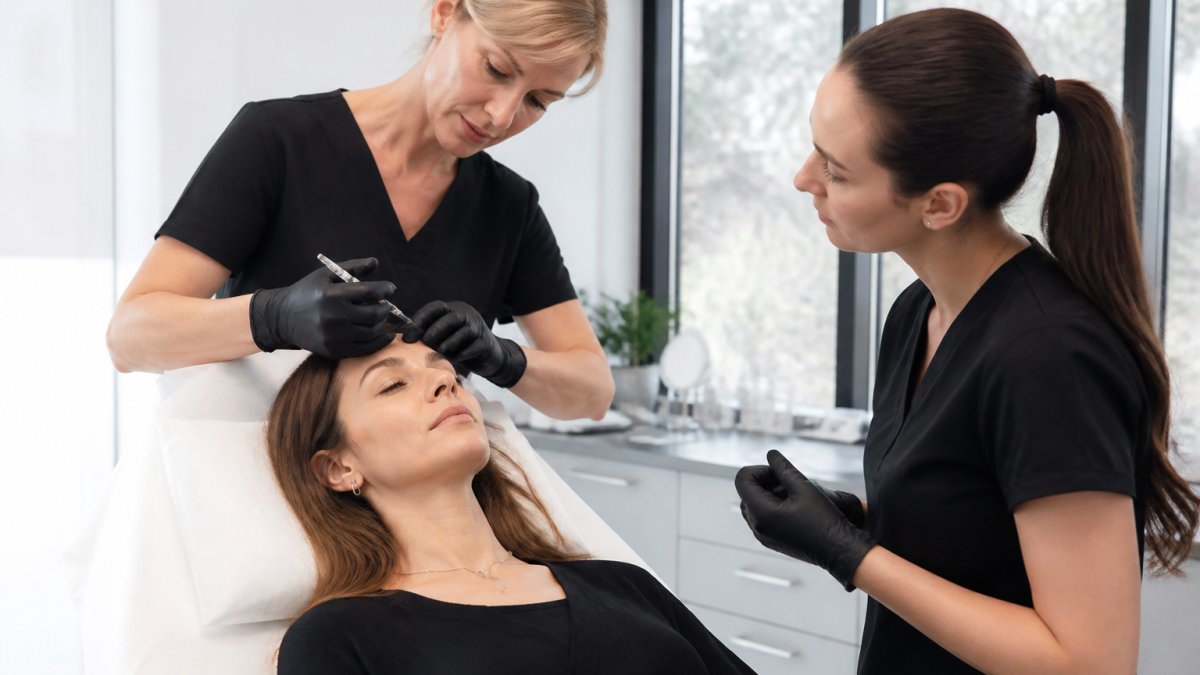
Online courses provide foundational knowledge, but injections are a physical skill requiring observation, practice, and supervised live-patient experience before independent work.
Hands-on practice and video demonstrations
Start with video demonstrations of correct technique, common mistakes, and troubleshooting. Staff should watch multiple times and explain what they’re seeing.
Follow video with hands-on practice on silicone models. Your team should practice injection technique, needle angle, depth, and volume until confident.
Then move to live-patient observation, where staff watch an experienced practitioner communicate with the patient, position the needle, assess results, and handle unexpected responses.
Record sessions to create a video library of correct technique for future reference, reinforcing learning and ensuring consistency. (Source: Australian Competition and Consumer Commission (ACCC) consumer guarantees)
Mentoring and supervised live-patient experience
After observation, staff should perform injections under direct supervision on straightforward cases, with real-time feedback and technique correction.
Create a mentoring schedule assigning each trainee to a senior practitioner. Define the number of supervised cases required before independent practice and document each case.
Mentoring is ongoing. Even after staff become independent, check in regularly, review challenging situations, and offer guidance.
The goal is confidence paired with competence. Staff should feel supported and know they can ask questions without judgment.
Improving Aesthetic Clinic Staff Retention Through Training
Staff turnover is expensive, costing institutional knowledge, patient relationships, and continuity. Training and professional development are among the most effective retention tools.
People stay when they feel valued and see a path forward. Training signals investment and creates advancement opportunities.
Career pathways and professional development
Define career progression: receptionist to clinic coordinator to practice manager; aesthetic nurse from general support to specialized injectables to mentoring.
Make pathways explicit and share with your team. Help staff understand what skills they need to advance, then provide training and opportunities.
Offer professional development beyond immediate clinical needs: business management courses, specialist certifications. This builds loyalty and creates internal leaders.
Continuing education and accreditation opportunities
Aesthetic medicine evolves constantly. Your staff need ongoing education to stay current with new techniques, devices, and safety guidelines.
Identify relevant accreditation and certification programs. Support staff in meeting CPD requirements by covering course fees and allowing time off for training.
Create a learning culture by sharing research, discussing case studies, and bringing in external trainers occasionally. This keeps your clinic at the forefront.
Document all continuing education. This supports professional development conversations and demonstrates to regulators that your team is trained and current.
Measuring Training Effectiveness and Practice Growth
Training is an investment. Measure whether it’s paying off with concrete metrics, not vague improvements.
Performance appraisals and skill validation
Conduct annual performance appraisals using your competency framework. Have staff demonstrate skills and explain their approach to common scenarios.
Tie appraisals to compensation and advancement. Recognize progress and create promotion opportunities for mastered skills.
Use appraisals to identify ongoing training needs. If multiple staff struggle with a skill, invest in targeted training.
Patient safety outcomes and revenue impact
Track patient safety metrics: adverse events, complaints, and incidents. Good training should reduce these numbers.
Track revenue metrics: treatment volume, average transaction value, and patient retention. Confident, competent staff deliver better results and drive revenue growth.
Track patient satisfaction through surveys, reviews, and feedback. Well-trained staff create better experiences and improve satisfaction scores.
Link metrics back to your training program. If patient satisfaction improved after launching your onboarding checklist, share these wins with your team.
Implementing Your Aesthetic Staff Training Programme
Now comes execution. Many clinic owners understand training’s importance but struggle with logistics: choosing formats, scheduling, budgeting, and sustaining effort.
Selecting training delivery formats and scheduling
Online courses offer flexibility but lack hands-on practice and immediate feedback. Use them for foundational knowledge: anatomy, safety protocols, product knowledge.
In-person workshops provide hands-on practice and group learning but require time away and external costs.
Vendor training is often free or low-cost. Equipment suppliers typically offer training on their devices. Take advantage to ensure staff know your specific equipment well.
Mentoring is most effective but most resource-intensive. Use it for critical clinical skills and ongoing professional development.
Create a training calendar: onboarding within the first month, annual laser safety refreshers, quarterly skill development.
Budget planning and long-term sustainability
Training requires investment in course fees, trainer time, staff time, and materials. Budget for it explicitly.
Estimate costs: online courses cost less than workshops; vendor training is often included; mentoring costs staff time.
Build training into your annual budget as continuous investment. Many practices allocate 2-3% of annual revenue for staff development.
DermTech Devices supports your training efforts with medical-grade equipment. Our multi-modality laser platforms enable reliable performance.
Track training investment and outcomes.
The most successful aesthetic practices treat training as continuous.
Aesthetic staff training is foundational to practice growth.
Frequently Asked Questions
What should be included in an aesthetic staff training plan?
A comprehensive aesthetic staff training plan covers clinical skills and injection protocols, laser safety and equipment operation, patient communication and consent procedures, regulatory compliance and documentation, competency assessment and validation, and ongoing continuing education. The plan should include both initial onboarding and regular refresher training. Hands-on practice with video demonstrations and mentoring from experienced practitioners ensures staff gain confidence before treating live patients. A structured approach reduces errors, improves patient safety, and supports long-term practice growth.
How can aesthetic clinics assess staff competency?
Competency assessment for aesthetic clinic staff should include written knowledge tests covering anatomy, safety protocols and treatment indications; practical demonstrations of injection techniques or equipment operation observed by a qualified assessor; patient feedback and outcome tracking to measure real-world performance; and documented performance appraisals tied to specific competency levels. Many clinics use a tiered system: foundational competency for new staff, intermediate for those with supervised experience, and advanced for independent practitioners. Regular reassessment ensures skills remain current and identifies training gaps early.
Why is laser safety training critical for aesthetic staff?
Laser safety training protects both staff and patients from serious harm including eye injury, skin burns, and electrocution. Staff must understand laser classifications, safe operating procedures, personal protective equipment requirements, and emergency protocols. Proper training reduces liability, prevents incidents, and builds patient confidence. Aesthetic practices should ensure all staff handling laser equipment complete accredited laser safety training and receive regular refresher sessions. Documentation of training completion also supports regulatory compliance and demonstrates duty of care.
How does staff training improve aesthetic clinic retention and practice growth?
Staff who receive structured training and clear career pathways are more engaged, confident, and likely to stay. Investment in continuing education and professional development signals that the clinic values employee growth, which improves retention and reduces costly turnover. Well-trained staff deliver better patient outcomes, leading to higher satisfaction, positive reviews, and repeat business. Training also enables staff to handle a wider range of treatments and take on more responsibility, increasing revenue per practitioner and supporting practice expansion without proportional cost increases.