Blog Details
Table of Contents
- Why Technology Is Essential for Scaling Aesthetic Practice
- Choosing the Right Aesthetic Practice Management Software
- Skin Analysis Technology for Clinics: Precision and Patient Value
- Medical Spa Technology Investment: Planning for Return on Investment
- Aesthetic Clinic Staff Training: Adoption and Competency
- Implementation Roadmap: A Staged Approach to Technology Deployment
- Compliance, Data Security, and Long-Term Sustainability
- Conclusion: Building Your Technology Strategy
- Frequently Asked Questions
Last Updated: October 6, 2026
Why Technology Is Essential for Scaling Aesthetic Practice
Scaling aesthetic practice technology is no longer optional, it’s the difference between practices that grow and those that plateau. The challenge isn’t whether to invest in technology; it’s how to do it strategically so that each tool actually improves patient outcomes and operational efficiency rather than creating friction.
Most aesthetic practitioners underestimate how much their current systems limit growth. When you’re relying on manual appointment booking, basic photography, and disconnected patient records, you’re not just wasting staff time, you’re creating inconsistency in treatment planning and missing opportunities to upsell complementary services. A practice that can’t easily track which treatments each patient has received, when, and with what results, cannot personalise care effectively. That’s where precision-engineered technology becomes essential.
The real value of scaling aesthetic practice technology isn’t in having the most advanced tools. It’s in having the right tools integrated into your workflow so they reduce friction, not add it. This means starting with foundational systems, practice management software, electronic medical records, and basic skin analysis, before moving to more specialised equipment. Operational efficiency relies on this seamless digital architecture, which eventually necessitates scaling HR systems to support the expanding team required to manage these sophisticated clinical workflows.
Choosing the Right Aesthetic Practice Management Software
Aesthetic practice management software sits at the centre of your operational efficiency. It handles scheduling, patient communication, clinical notes, billing, and inventory, all the moving parts that, when fragmented across different systems, create bottlenecks and errors.
When evaluating aesthetic practice management software, look for systems that integrate appointment scheduling with patient history, treatment notes, and outcome tracking. You need to see at a glance what treatments a patient has had, when they’re due for follow-up, and what results were achieved. This isn’t just administrative convenience; it’s clinical precision.
Integration is critical. Your practice management software should connect with your inventory system so that when stock runs low, you know immediately. It should flag when a patient’s preferred treatment package is expiring. It should send automated reminders that reduce no-shows.
The cost of fragmented systems is often hidden. When your receptionist has to manually enter appointment data into two systems, or your clinicians have to document treatments in one place and billing in another, you’re paying twice: once in staff time and again in the errors that inevitably follow. A unified aesthetic practice management software eliminates that duplication.
Choose software that your staff will actually use. The most feature-rich platform fails if clinicians find it cumbersome and revert to paper notes. Test the user interface with your team before committing, and prioritise ease of use over feature count.
Skin Analysis Technology for Clinics: Precision and Patient Value
Skin analysis technology transforms treatment planning from subjective assessment to objective data. This shift matters because it changes how you communicate with patients, how you track results, and how you justify treatment recommendations.
Basic visual assessment, looking at a patient’s skin and making recommendations, works until you need to demonstrate progress or explain why a particular treatment is necessary. Objective skin analysis technology gives you measurable data: hydration levels, melanin distribution, texture variations, and pore size. A patient can see the data themselves, which builds confidence in treatment recommendations and justifies the investment.
The clinical value extends beyond the initial consultation. When you have baseline measurements from the first visit, you can demonstrate progress after treatment. A patient who sees their hydration score improve from 35% to 68% over three months is more likely to complete a treatment course and recommend your practice to others. This isn’t marketing, it’s evidence of efficacy that patients can see themselves.
Skin analysis technology also enables treatment personalisation. Different skin types respond differently to the same treatment. Objective data helps you adjust intensity, frequency, and combination therapies based on the individual’s actual skin condition, not a generalised protocol. This precision reduces adverse outcomes and improves satisfaction.
Skin analysis technology pays for itself through improved patient retention and treatment completion rates. Patients who see measurable progress stay with your practice longer and are more likely to try complementary treatments.
Medical Spa Technology Investment: Planning for Return on Investment
A medical spa technology investment is substantial, and it needs to be planned with clear return-on-investment expectations. The mistake many practitioners make is treating technology as a fixed cost rather than an investment that should generate measurable returns.
Start by calculating your current revenue per treatment type and your average patient lifetime value. Then model how technology changes those numbers. A multi-modality laser platform might increase the treatments you can offer, allowing you to serve more patients or increase treatment frequency. Skin analysis technology might increase treatment completion rates by 15-20% because patients see measurable results.
The total cost of ownership over five years includes not just the equipment purchase but also maintenance, software licensing, staff training, and potential downtime. A reliable platform matters because downtime directly costs revenue. If your laser system requires frequent repairs or your software crashes regularly, you lose patient appointments and income.
When evaluating technology providers, ask about their track record with practices similar to yours. How long have their systems been in the field? What’s the failure rate? What does support look like when something breaks? A provider who disappears after installation leaves you stranded.
Underestimating training time and staff adoption costs is a common mistake. Budget not just for the initial training but for ongoing support as new staff join and existing staff need refreshers. Technology that sits unused because your team never mastered it is a total loss.
Aesthetic Clinic Staff Training: Adoption and Competency
Technology adoption fails when staff aren’t trained properly. This isn’t about intelligence, it’s about having structured, ongoing support that meets people where they are in their learning journey.
Your aesthetic clinic staff training programme should include three components: initial technical training on how to use the system, clinical training on what the data means and how to apply it, and ongoing support as questions arise. A one-day workshop followed by silence doesn’t work. Staff need access to resources, the ability to ask questions, and regular refreshers as new features are introduced or new team members join. (Source: Australian Digital Health Agency guidelines)
Different team members need different training. Your receptionist needs to understand scheduling and patient communication workflows. Your clinicians need to understand how to interpret skin analysis data and document treatments properly. Your manager needs to understand reporting and inventory management. Generic training that tries to cover everything for everyone wastes time and leaves gaps.
The adoption phase typically takes 4-8 weeks before staff are genuinely comfortable. During this period, expect some slowdown in efficiency as people learn new workflows. Plan for this. Don’t expect your practice to run faster immediately; expect it to run at normal speed, then faster once adoption is complete.
Implementation Roadmap: A Staged Approach to Technology Deployment
A staged implementation reduces risk and allows you to learn from each phase before moving to the next.
Phase 1: Foundation (Weeks 1-4), Implement practice management software and electronic medical records. This is your operational backbone. Get scheduling, patient records, and basic documentation working smoothly. Don’t add anything else yet.
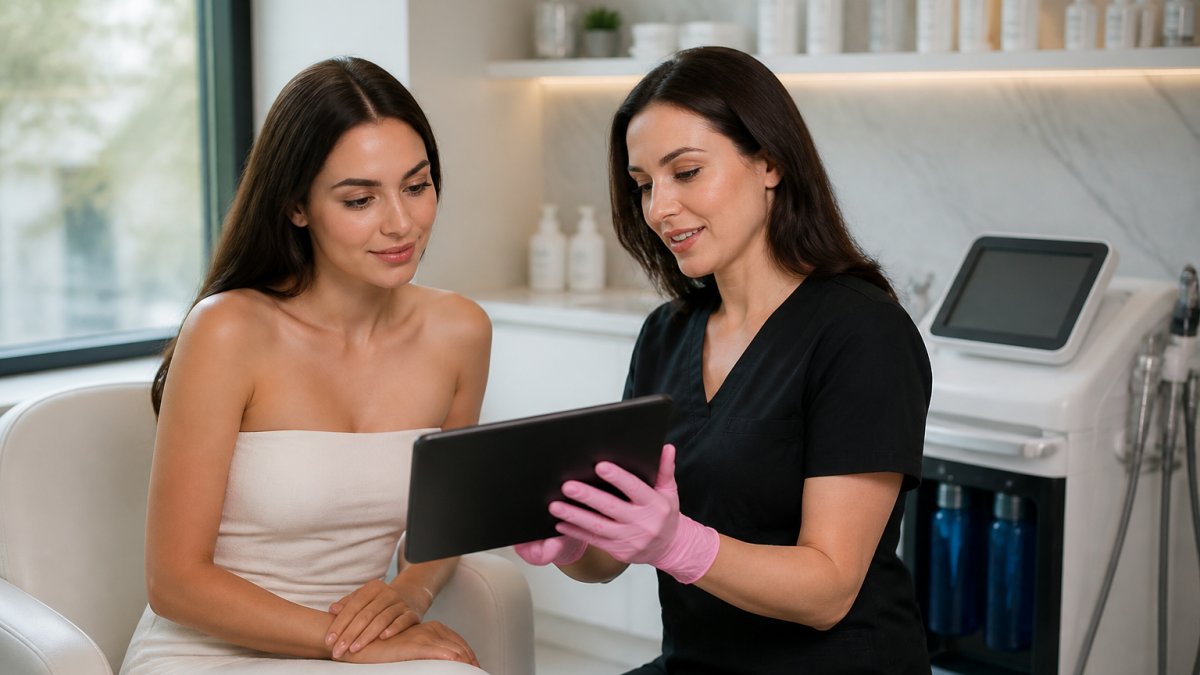
Phase 2: Clinical Enhancement (Weeks 5-8), Add skin analysis technology. Once your team is comfortable with practice management software, introduce objective skin assessment. This enhances treatment planning without overwhelming your workflow.
Phase 3: Advanced Modalities (Weeks 9+), Expand treatment capabilities with multi-modality laser platforms or other specialised equipment.
This staged approach lets you measure impact at each phase. After Phase 1, you’ll see administrative time savings. After Phase 2, you’ll see improved treatment precision and patient satisfaction.
The timeline matters. Rushing implementation increases errors and staff frustration. A four-week foundation phase allows your team to genuinely master practice management before adding complexity. This isn’t wasted time, it’s investment in adoption quality.
Compliance, Data Security, and Long-Term Sustainability
Patient data security isn’t optional in aesthetic practice. You’re storing sensitive health information, treatment histories, and payment details. A data breach damages trust and creates legal liability.
Your technology stack must meet Australian privacy standards. This means understanding what data you’re collecting, where it’s stored, how it’s encrypted, and who has access. Your practice management software and electronic medical records should have clear privacy policies and security certifications. When evaluating providers, ask about their compliance frameworks and audit history.
Staff access controls matter. Not every team member needs access to every patient record. Your receptionist doesn’t need to see clinical notes; your clinicians don’t need access to billing details. Role-based access controls reduce the risk of accidental or intentional data misuse.
Regular backups and disaster recovery planning are essential. If your system fails, you need to be able to restore patient records quickly. A provider who can’t guarantee recovery within hours is a liability. Ask about their backup frequency, recovery time objectives, and whether backups are stored offsite.
Data security is also about choosing reliable partners. A provider who cuts corners on security to reduce costs will eventually cost you more in breach response, regulatory fines, and lost patient trust.
Conclusion: Building Your Technology Strategy
Scaling aesthetic practice with new technology works when you approach it strategically rather than reactively. Start with your operational foundation, practice management software and electronic medical records. Add clinical enhancement through skin analysis technology. Expand service offerings through reliable, integrated equipment. Each phase builds on the previous one, and each delivers measurable value.
The practices that scale successfully aren’t the ones with the most advanced technology. They’re the ones whose technology is integrated into their workflow, whose staff are trained and confident, and whose systems reliably support clinical excellence and operational efficiency.
At DermTech Devices, we partner with aesthetic practitioners who understand that technology is an investment in practice growth, not just an expense. Our advanced multi-modality laser platforms and next-generation skin analysis systems are designed for reliability, precision, and long-term value.
Partner with us and build a technology strategy that supports your practice’s growth for years to come.
The key challenge in scaling aesthetic practice isn’t choosing between technology options, it’s implementing them in a way that your team actually adopts and that genuinely improves patient care.
Frequently Asked Questions
What technology should an aesthetic clinic invest in first when scaling?
Start with practice management software and skin analysis technology. These form the foundation for operational efficiency and treatment planning. Once these systems are established and your team is trained, add multi-modality laser platforms or complementary devices based on demand. This staged approach reduces overwhelm and allows staff to master each system before adding complexity.
How can skin analysis technology improve aesthetic consultations and revenue?
Objective skin analysis technology provides measurable data on skin condition, ageing markers, and treatment response. This allows practitioners to personalise treatment plans with precision, justify recommendations to patients with visual evidence, and track progress objectively. Patients trust data-driven recommendations more, leading to higher consultation-to-treatment conversion and improved retention.
What does total cost of ownership for aesthetic clinic technology actually include?
Total cost of ownership spans device purchase, installation, staff training, maintenance contracts, calibration, consumables (where applicable), software licensing, and ongoing support. Over a five-year period, maintenance and support often equal 15-25% of the initial device investment. Request detailed breakdowns from suppliers to compare true lifetime costs, not just purchase price.
How should staff be trained when introducing new aesthetic technology?
Effective training requires hands-on practice before clinical use, documented competency assessment, and ongoing refresher sessions. Assign a technology champion within your team to lead adoption and provide peer support. Training should cover clinical protocols, safety features, troubleshooting, and patient communication. Ongoing support from your supplier ensures staff confidence and reduces equipment downtime.
How can an aesthetic practice measure return on investment from technology investment?
Define practice-specific KPIs: patient acquisition cost, treatment volume per device, average revenue per patient, staff productivity (treatments per hour), and patient retention rate. Track these metrics before and after technology deployment. Calculate payback period by dividing total investment by incremental monthly profit. Most medical-grade devices achieve ROI within 18-36 months when integrated into a growing practice.
What compliance and data security measures apply to aesthetic clinic technology?
Aesthetic practices must comply with the Privacy Act 1988 (Cth) for patient data protection and meet relevant state-based health practitioner registration requirements. Ensure practice management software and skin analysis systems have data encryption, secure backups, and audit trails. Verify that suppliers have cybersecurity protocols and comply with Australian privacy standards. Document your data governance practices and review them annually.