Blog Details
Table of Contents
- Why Aesthetic Clinic Growth Requires a Holistic Approach in 2026
- Patient Retention Strategies for Skin Clinics
- Medical-Grade Laser Technology ROI and Service Portfolio Auditing
- AHPRA Compliance for Aesthetic Clinics and Risk Management
- Digital Marketing and Paid Search for Aesthetic Clinic Visibility
- Operational Efficiency: AI Automation and Diary Management
- Financial Modelling and Profit Margin Optimisation
- Positioning Medical vs Cosmetic Services for Market Authority
- Frequently Asked Questions
Last Updated: September 3, 2026
Why Aesthetic Clinic Growth Requires a Holistic Approach in 2026
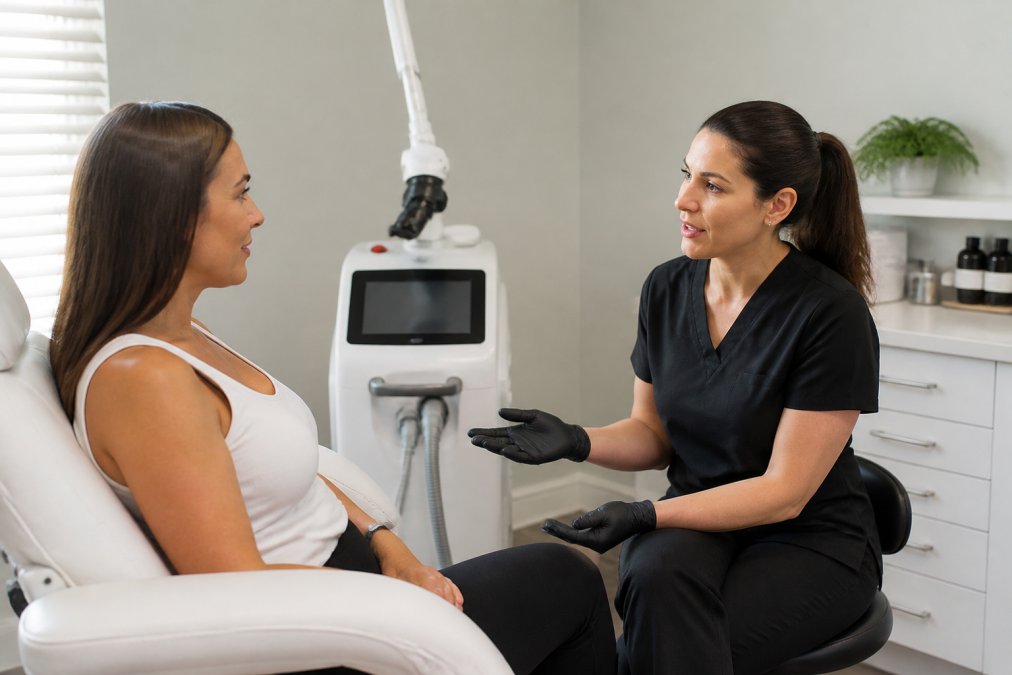
Aesthetic clinic growth strategies have fundamentally shifted. Five years ago, clinics could compete on treatment availability alone. Today, market saturation demands a holistic approach: patient retention, operational efficiency, regulatory compliance, and strategic financial planning woven together.
Clinics scaling sustainably build on three pillars: clinical excellence through reliable medical-grade technology, patient lifetime value through structured retention programmes, and operational resilience through automation and staff development.
At DermTech Devices, we’ve worked with practitioners across the spectrum, solo RNs, dermatologists managing multi-modality practices, and medical spa operators. What separates clinics experiencing genuine growth from those treading water is rarely a single tactic. It’s the integration of technology choices, patient experience design, and business fundamentals.
This guide covers eight core areas driving aesthetic clinic growth in 2026. Each builds on the others: patient retention connects to diary management, equipment ROI ties to service portfolio decisions, and compliance becomes a competitive advantage.
Patient Retention Strategies for Skin Clinics
Patient retention is where growth begins. A clinic that converts one-off clients into repeat customers fundamentally changes its economics, replacing costly acquisition with deepened relationships.
Building a post-treatment experience that converts one-off clients into repeat customers
The gap between treatment completion and the next booking is where most clinics lose momentum. A structured post-treatment experience closes that gap through clear communication about healing, proactive follow-up at key intervals, and a reason to return.
Effective clinics use automated SMS or email sequences on day two, day seven, and day fourteen post-treatment. These reassure patients, gather feedback, and plant the seed for the next appointment. Personalising sequences by treatment type increases engagement, a client post-laser resurfacing has different recovery milestones than someone post-chemical peel.
The most effective signal: ask patients to book their next appointment before they leave. This removes friction and capitalises on post-treatment enthusiasm. When booking happens weeks later, motivation has faded.
Diary management and appointment spacing to maximise lifetime value
Diary management is a retention lever. How you space treatments directly affects patient lifetime value and clinic revenue.
Most aesthetic treatments benefit from structured spacing protocols. Laser hair removal typically requires six to eight sessions spaced four to six weeks apart (the American Academy of Dermatology). Skin rejuvenation courses often recommend monthly treatments for three to six months (peer-reviewed research). Clinics that build these protocols into their diary system ensure patients stay on track and don’t drift away.
When a patient completes a session, the next appointment should be pencilled in, or they should leave with a clear recommendation and booking incentive. A patient who completes a six-session laser course generates more revenue and better outcomes than one who stops after two sessions because momentum stalled.
Staggering appointments across your practitioner team ensures consistent availability, reduces wait times, and allows you to match patients with specific practitioners based on expertise or preference, another retention signal.
Medical-Grade Laser Technology ROI and Service Portfolio Auditing
Equipment decisions shape clinic growth for years. The return on a multi-modality laser platform depends on strategic deployment.
Assessing which treatment modalities justify investment
Not every treatment modality makes sense for every clinic. A solo practitioner has different needs than a five-practitioner dermatology centre. Match investment to demand, skill, and profitability.
Start with a portfolio audit. Map current treatments against three metrics: patient demand (enquiries received), practitioner skill (who can deliver this safely?), and profitability (revenue per treatment minus consumables costs).
A treatment with high demand but low profitability might not justify investment. A niche service with lower demand but strong margins, advanced skin analysis or laser-assisted tattoo removal, might differentiate you and attract higher-value patients.
Medical-grade laser technology typically justifies investment when you can operate it across multiple practitioners and treatment types. A multi-modality platform spreads capital cost across more revenue-generating treatments, improving ROI. Reliability and support structure matter enormously, equipment downtime directly reduces revenue. A platform from a provider with strong local support, like DermTech Devices, minimises risk and ensures consistent service delivery.
Revenue per treatment and scalability across multi-practitioner centres
Revenue per treatment varies significantly by modality and market. Understanding this distribution shapes your growth strategy.
For multi-practitioner centres, scalability is critical. A system that can be operated safely and effectively by multiple practitioners, with clear protocols, proper training, and reliable performance, multiplies equipment ROI. This is where equipment choice intersects with staff training and operational systems.
A common mistake is investing in advanced technology without investing equally in training and protocols. A multi-modality platform sitting in a clinic where only one practitioner knows how to use it is underutilised. Clinics that scale successfully treat technology adoption and staff credentialing as a single project.
AHPRA Compliance for Aesthetic Clinics and Risk Management
Regulatory compliance is non-negotiable in aesthetic medicine. AHPRA and state-based professional boards set clear standards for equipment operation, staff qualifications, and treatment protocols.
Regulatory requirements for medical-grade equipment operation
Medical-grade laser and light-based devices fall under specific regulatory frameworks. AHPRA requires that only appropriately qualified practitioners operate these systems (ahpra.gov.au). For nurses and allied health professionals, rules vary by state.
The key principle: the person operating the device must have documented training specific to that device and the conditions being treated. Generic laser training is insufficient.
Many clinics create unintended risk by purchasing equipment, providing basic training, and assuming compliance is achieved. AHPRA expects documented, ongoing evidence of competency, including initial training records, refresher training, and documented assessment of practitioner performance.
Partner with equipment suppliers who provide comprehensive training programmes aligned with AHPRA expectations. DermTech Devices collaborates with globally recognised medical technology brands to ensure training meets regulatory standards. Documentation is your defence, maintain records of all training, competency assessments, and ongoing professional development.
Staff training and credentialing as a competitive advantage
Staff training transcends compliance; it’s a growth lever. Clinics with well-trained, credentialed practitioners attract more patients, deliver better outcomes, and retain staff longer.
A structured credentialing programme signals to patients that your team prioritises safety and results. It also reduces staff turnover, practitioners value opportunities to develop skills and gain formal recognition. When patients research aesthetic clinics, they look for evidence of expertise. A team with documented qualifications in cosmetic nursing, laser safety, and specific treatment modalities is more reassuring than a clinic with no visible credentials.
Better-trained practitioners achieve better results, leading to higher patient satisfaction, more referrals, and stronger retention. The upfront cost of training pays for itself through improved outcomes and reduced complications.
Digital Marketing and Paid Search for Aesthetic Clinic Visibility
Aesthetic clinic growth increasingly depends on digital visibility. Patients researching treatments now begin online.
Digital marketing for aesthetic clinics typically combines organic local SEO (appearing in local search results), paid search (Google Ads for high-intent keywords), and social media engagement. Local SEO is foundational, ensure your clinic appears in Google Maps, has consistent business information across directories, and has genuine patient reviews. Paid search works well for high-intent keywords; patients actively searching for specific treatments in your area. Social media (particularly Instagram and TikTok) builds brand awareness and showcases before-and-after results.
Many aesthetic clinics underinvest in digital marketing, assuming word-of-mouth will suffice. In saturated markets, this is risky. A modest paid search budget combined with consistent social media content typically generates measurable patient acquisition.
Aesthetic clinic websites often fail to convert browsers into bookers. A strong digital strategy includes optimised landing pages, clear treatment descriptions, transparent pricing or consultation booking, and social proof (patient testimonials, before-and-afters).
Operational Efficiency: AI Automation and Diary Management
Operational efficiency directly impacts profitability. Many aesthetic clinics run on manual processes that consume staff time without adding patient value.
AI-powered automation is reshaping clinic operations. Appointment reminders, patient intake forms, follow-up communications, and basic enquiry responses can be automated, freeing staff to focus on patient care and complex tasks.
Diary management software with built-in automation is particularly valuable. Systems that automatically send appointment reminders reduce no-shows, automatically space treatments according to your protocols, and flag opportunities for upselling complementary services. A patient completing a laser hair removal session receives an automated reminder for their next appointment (spaced according to your protocol), a suggestion for complementary skin analysis, and a feedback request. The staff member who would have spent 30 minutes on these tasks is instead available for patient consultations.
The ROI on automation systems is typically strong, particularly in multi-practitioner centres where time savings multiply across the team.
Financial Modelling and Profit Margin Optimisation
Sustainable growth requires financial clarity. Many aesthetic clinic owners operate on intuition rather than data, missing opportunities to improve margins.
A basic financial model should track revenue by treatment type, cost of goods (consumables, equipment depreciation), staff costs, and overhead. This reveals which services are truly profitable.
Common findings: a high-volume, low-margin service might consume significant staff time but contribute little to profit. A lower-volume, higher-margin service might be undermarketed. Shifting your service mix toward higher-margin offerings while maintaining volume directly improves profitability.
Staff costs are typically the largest expense. Optimising scheduling, reducing overtime, and improving staff productivity through training and systems all improve margins. Equipment ROI calculations should account for total cost of ownership: purchase price, maintenance, consumables, training, and opportunity cost of downtime.
Financial discipline, tracking numbers, adjusting based on data, and making decisions based on margins rather than intuition, separates clinics that grow sustainably from those that plateau.
Positioning Medical vs Cosmetic Services for Market Authority
The framing of your services shapes patient perception, pricing power, and market position. A clinic positioned as “medical aesthetics” typically commands different pricing and attracts different patients than one positioned as “cosmetic beauty.”
Medical positioning emphasises clinical outcomes, safety protocols, and practitioner qualifications. It appeals to patients seeking results-driven treatments backed by clinical evidence and typically supports higher pricing. Cosmetic positioning emphasises aesthetics, wellness, and lifestyle enhancement, appealing to a broader market with higher volume but lower per-treatment pricing.
Many successful clinics blend both. A dermatology practice might position core services as medical-grade, evidence-based treatments, whilst offering complementary cosmetic services to broaden appeal and increase patient lifetime value.
Your positioning should align with your market, your team’s expertise, and your growth ambitions. A solo RN might position as a boutique medical aesthetics provider. A multi-practitioner centre might position as a comprehensive aesthetic medicine hub.
Aesthetic clinic growth in 2026 isn’t about chasing the latest treatment trend or undercutting competitors on price. It’s about building a sustainable system: reliable technology that delivers consistent results, patients who return because their experience was exceptional, staff who are trained and motivated, and financial discipline that ensures profitability.
DermTech Devices supports this vision by providing medical-grade laser platforms and skin analysis systems designed for performance and reliability. Our multi-modality solutions help clinics expand their treatment portfolio without compromising quality. We partner with globally recognised medical technology brands to ensure your equipment meets regulatory standards and delivers the clinical outcomes your patients expect.
Ready to build your clinic’s growth strategy? Contact DermTech Devices to discuss how advanced technology and structured operational systems can support your practice’s next phase of growth. Partner with us to access the equipment, training, and support that transforms aesthetic clinics into thriving, scalable businesses.
Frequently Asked Questions
How can aesthetic clinics improve patient retention rates?
Patient retention depends on three factors: post-treatment experience, consistent results, and strategic follow-up scheduling. Create a structured aftercare protocol that includes follow-up messaging at key intervals (48 hours, 2 weeks, 8 weeks). Track treatment outcomes with objective skin analysis data to demonstrate results to patients. Implement a loyalty programme that rewards repeat bookings. Most clinics see retention lift when they shift from reactive appointments to proactive diary management, scheduling follow-ups during the initial consultation rather than hoping patients rebook.
What role does medical-grade laser technology play in aesthetic clinic scalability?
Medical-grade laser platforms enable clinics to expand their service portfolio without hiring additional practitioners immediately. Multi-modality systems allow one practitioner to treat a wider range of skin concerns efficiently, increasing revenue per appointment slot. Precision-engineered equipment also reduces treatment variability, which improves patient outcomes and builds trust. For multi-practitioner centres, reliable technology reduces downtime and supports consistent clinical benchmarks across the team. The ROI depends on matching equipment capability to your patient demand, investing in features you don’t use wastes capital.
How will AHPRA regulations impact aesthetic clinic operations in 2026?
AHPRA’s scope of practice standards require that all practitioners using medical-grade equipment hold appropriate qualifications and work within their registration level. This means aesthetic nurses must maintain their registration and stay within scope; doctors can operate a broader range of modalities. Clinics must document training and competency for every practitioner using laser and energy-based devices. Non-compliance risks regulatory action and loss of registration. Clinics that treat this as a competitive advantage, by ensuring staff are formally trained and credentialed, build trust with patients and reduce liability exposure.
What are the key operational benchmarks for a successful aesthetic clinic?
Track four metrics: patient acquisition cost (PAC), customer lifetime value (CLV), treatment conversion rate (percentage of consultations that become bookings), and practitioner utilisation (percentage of available appointment slots filled). Healthy benchmarks vary by clinic size, but most profitable clinics maintain a CLV that is at least 5-8 times their PAC. Monitor diary utilisation weekly, idle appointment slots represent lost revenue. Also track average revenue per patient per year; this reveals whether your service mix and retention strategy are working. Use this data to prioritise which treatments and marketing channels deserve investment.
What should I look for in a medical-grade equipment supplier to ensure long-term support?
Verify that the supplier offers on-site installation, practitioner training, and responsive technical support, not just a one-off workshop. Ask for references from practices similar in size to yours and contact them directly about response times and support quality. Ensure the supplier collaborates with recognised medical technology brands and can provide documentation of equipment certification and performance standards. Clarify what maintenance and spare parts support looks like over 5 years. A supplier founded by a practitioner (such as a Registered Nurse) often understands clinic operations better than a purely sales-focused distributor.
How do I know if upgrading to objective skin analysis data will improve my revenue?
Objective skin analysis tools (such as multi-spectrum imaging) quantify results that patients can see and compare over time. This builds confidence in treatment efficacy and justifies follow-up visits. Clinics using objective data report higher patient satisfaction and improved retention because results are measurable, not subjective. The revenue lift comes from two sources: higher conversion rates at consultation (patients are more likely to book when they see baseline data) and improved retention (patients see measurable improvement and rebook). Start by tracking your current conversion and retention rates, then measure again 3 months after implementing analysis tools.
What does training and ongoing support typically include from equipment suppliers?
Quality suppliers offer initial hands-on training covering equipment operation, safety protocols, treatment planning, and patient communication. Ongoing support should include access to technical troubleshooting, periodic refresher sessions, and updates on new treatment protocols. Some suppliers provide online resources, video libraries, and peer learning forums. Avoid suppliers that offer only a one-day workshop and then disappear. Ask prospective suppliers how they support staff turnover, when you hire a new practitioner, they should be able to complete certified training without delaying your clinic operations.
How can small aesthetic clinics with just one or two practitioners benefit from multi-modality platforms?
Multi-modality platforms allow small clinics to offer a broader range of treatments without investing in separate single-use devices. A two-person clinic can expand from basic skin rejuvenation to vascular lesion treatment, pigmentation removal, and hair reduction using one integrated system. This increases revenue per patient (patients stay for multiple services) and improves patient convenience (one-stop clinic experience). The key is choosing a platform that matches your current patient demand, don’t over-invest in features you won’t use within 2-3 years. Start with the core modalities your patients ask for, then expand as demand grows.