Blog Details
Table of Contents
- Why Downtime Costs More Than You Think
- Build a Preventive Maintenance Schedule
- Choose a Medical Laser Supplier With Reliable Support
- Secure a Laser Equipment Service Contract That Protects You
- Calculate and Track Your Downtime Costs
- Plan for Backup Capacity and Treatment Continuity
- Troubleshoot Common Breakdowns Before They Escalate
- Conclusion
- Frequently Asked Questions
Last Updated: October 7, 2026
Why Downtime Costs More Than You Think
Reducing downtime for aesthetic laser equipment protects your bottom line and your reputation. (Source: the Australian Competition and Consumer Commission (ACCC) website)
When your laser system goes down, appointments get cancelled, patients get frustrated, and staff sit idle. The financial damage extends far beyond the hours the equipment is broken.
A clinic performing five laser treatments daily loses not just that day’s income, but also the cost of rescheduling patients and potentially losing clients to competitors. Over a year, even occasional unplanned downtime adds up to significant lost revenue.
At DermTech Devices, we’ve worked with aesthetic practitioners across multiple clinic sizes. Those who manage downtime effectively treat equipment reliability as a core business asset, building patient trust and predictable revenue.
The real cost of downtime includes:
- Lost treatment revenue from cancelled appointments
- Staff wages for idle time
- Emergency repair costs
- Patient dissatisfaction and potential loss to competitors
- Rescheduling administrative burden
- Damage to your clinic’s reputation for reliability
Build a Preventive Maintenance Schedule
Preventive maintenance is your first line of defence against costly breakdowns, keeping your aesthetic laser equipment reliable and extending its lifespan.
Most practitioners underestimate how much maintenance prevents problems. A well-maintained laser system requires far fewer emergency repairs, avoiding the stress and inflated costs of urgent breakdowns.
Every laser system has a manufacturer’s recommended schedule. Follow it precisely. This typically includes:
- Daily checks: visual inspection, cleaning of optical surfaces, verification of cooling system function
- Weekly tasks: calibration verification, safety system testing, backup power supply checks
- Monthly procedures: deep cleaning of internal components, performance baseline testing
- Quarterly reviews: comprehensive system diagnostics, replacement of consumable parts
- Annual servicing: full system inspection by qualified technicians, performance certification
Create a written maintenance calendar, assign responsibility to a specific staff member, and use a checklist so nothing gets missed, a spreadsheet or clinic management software works fine.
Document every maintenance action, dates, tasks, issues found, parts replaced. This record is invaluable when troubleshooting or discussing warranty coverage.
Preventive maintenance also keeps your equipment within warranty. Most manufacturers require documented regular maintenance to honour claims; skipping it can void coverage and leave you paying full price for covered repairs (Warranties).
The investment in preventive maintenance is small compared to the cost of unplanned downtime or early equipment failure.
Choose a Medical Laser Supplier With Reliable Support
Your equipment supplier is your partner in managing downtime. Choosing the right supplier means choosing reliable support when problems occur.
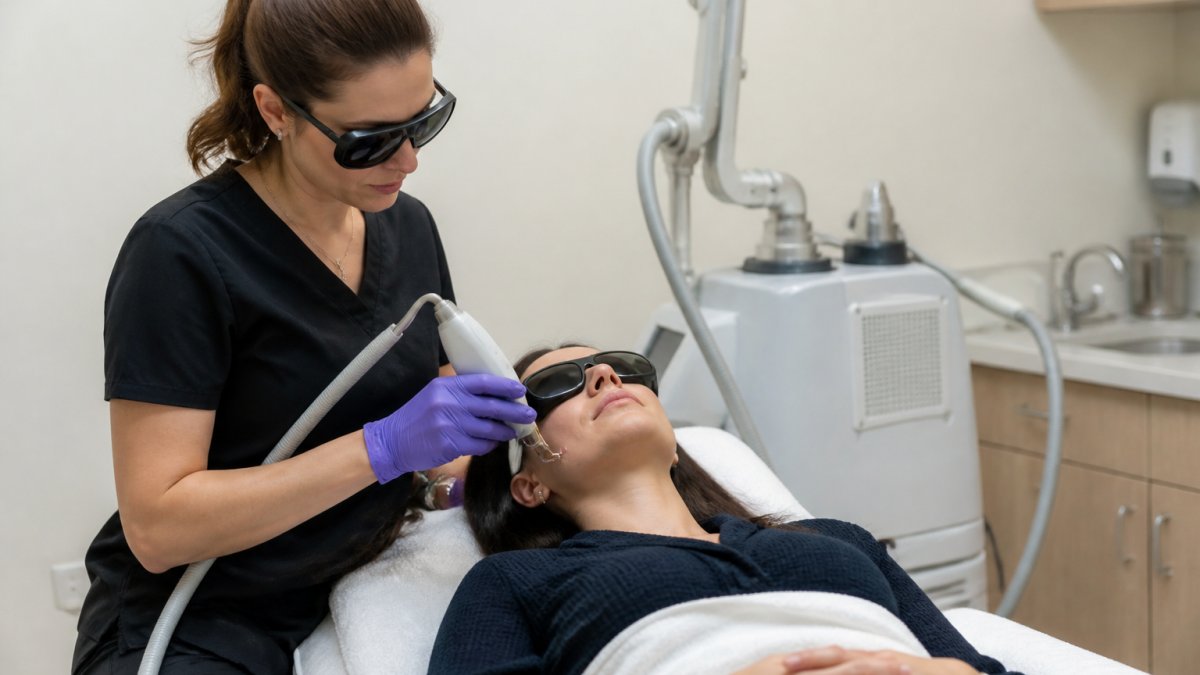
Not all suppliers are equal. Some disappear after installation; others build long-term relationships and stand behind their equipment. The difference shows when something breaks.
When evaluating a medical laser supplier, look for these critical factors:
Proven track record in your market. Ask for references from similar clinics. How long have they supported practices? Do they have local service relationships and examples of helping clinics manage equipment reliability?
Clear communication and responsiveness. Contact their support team with a test question before you buy.
Commitment to your success. The best suppliers invest in training your staff, provide ongoing technical support, and work proactively to prevent problems rather than just reacting.
At DermTech Devices, we’re built on this principle.
Our approach focuses on three pillars: medical-grade technology designed for performance, collaboration with globally recognised medical technology brands, and genuine support when you need it.
Secure a Laser Equipment Service Contract That Protects You
A comprehensive service contract is your insurance against unexpected downtime, defining exactly what happens when equipment needs repair and protecting you from surprise costs.
What to Look for in a Service Agreement
Your service agreement should clearly specify:
Scope of coverage. Does it include parts and labour? Are there exclusions? Does it cover misuse, accidental damage, or only manufacturing defects? Ambiguity here creates problems when you claim.
Response time commitments. How quickly will a technician respond? Is there a guaranteed window, and does it vary by time or day? A quick response is standard for critical equipment; some providers offer same-day or emergency response.
Preventive maintenance inclusions. Does the contract include regular maintenance visits, how often, and are replaced parts covered? Preventive maintenance should be part of your agreement, not an add-on.
Spare parts availability. Will the supplier provide a loaner while waiting for parts, and how long are typical waits? A supplier with local inventory often resolves issues faster than one ordering from overseas.
Performance guarantees. Does the contract guarantee uptime or offer compensation if downtime exceeds a threshold? Some advanced agreements include credits for extended downtime.
Response Time and Priority Support
Response time is where service agreements often disappoint, a technician “within 48 hours” means two days of lost revenue.
Prioritise agreements with these response commitments: (Source: the Therapeutic Goods Administration (TGA))
- Emergency response: same-day or next-business-day service for critical failures
- Priority scheduling: your service calls get scheduled ahead of non-contract customers
- Escalation procedures: if the first technician can’t resolve the issue, a senior technician or manager is assigned
- Remote diagnostics: many issues can be diagnosed and sometimes resolved over the phone, reducing downtime before a technician arrives
Some suppliers offer tiered support: standard response (48-72 hours) for routine maintenance, with extra for same-day emergency response on critical breakdowns. This balances cost against the reality that some downtime is more damaging than others.
Calculate and Track Your Downtime Costs
You cannot manage what you don’t measure. Tracking your downtime costs reveals the true financial impact and justifies investment in prevention.
Start by calculating your actual downtime cost. This requires knowing:
- Your average revenue per treatment
- Your typical number of treatments per day
- Your staff hourly wage costs
- Your emergency repair premium (the extra cost of urgent repairs versus planned maintenance)
Here’s a practical example. Assume your clinic performs five laser treatments daily at an average revenue of $300 per treatment. That’s $1,500 daily revenue.
One day of unplanned downtime costs you:
- Lost treatment revenue: $1,500
- Staff wages during downtime: $200
- Emergency repair premium
- Administrative rescheduling burden
Total: a significant amount per day of unplanned downtime.
Over a year, even occasional unplanned downtime can lead to significant costs. Preventing downtime can justify investment in a comprehensive service contract.
Create a simple tracking system:
| Downtime Event | Date | Duration (Hours) | Revenue Lost | Repair Cost | Total Impact |
|---|---|---|---|---|---|
| Laser malfunction | Jan 15 | 6 | $750 | $450 | $1,200 |
| Cooling system failure | Mar 22 | 24 | $1,500 | $800 | $2,300 |
| Software error | May 10 | 2 | $250 | $200 | $450 |
Review this data quarterly. Identify patterns. Are certain types of failures recurring? Are they preventable through better maintenance? Is your current service provider responding fast enough?
This data also justifies investment in reliability. When you can show that preventing downtime saves more than the cost of prevention, budget approval becomes straightforward.
Plan for Backup Capacity and Treatment Continuity
Even with excellent preventive maintenance and reliable support, equipment can fail unexpectedly. Planning for backup capacity ensures your clinic continues serving patients.
Backup capacity takes several forms depending on your clinic size and patient volume.
For single-practitioner clinics: Consider a partnership with another nearby practitioner who has compatible equipment.
For multi-practitioner clinics: Invest in a second laser system. You don’t need identical equipment.
For high-volume clinics: Multiple systems are essential. They provide redundancy and allow you to serve more patients.
For all clinics: Maintain a list of qualified backup providers.
Create a continuity plan document:
- Backup equipment options (internal or partner clinics)
- Contact details for backup providers
- Communication template for notifying patients of delays
- Rescheduling priorities (which patients get priority slots when capacity is limited?)
- Staff roles during equipment downtime
Brief your staff on this plan. They should know what to do if equipment fails and how to communicate with patients.
Troubleshoot Common Breakdowns Before They Escalate
Many equipment problems can be resolved quickly if caught early. Training your staff to recognise warning signs and perform basic troubleshooting prevents minor issues from becoming major downtime.
Common early warning signs include:
- Inconsistent treatment results. If patients report less dramatic outcomes than usual, the laser may be operating below optimal power. Check calibration and cleaning protocols.
- Unusual sounds or vibrations. Mechanical noise often indicates a cooling system issue or component misalignment. Stop using the equipment and contact your service provider.
- Error messages or software glitches. Document the exact error message and when it occurs. This information helps your service provider diagnose the problem remotely.
- Longer-than-normal treatment times. If treatments take significantly longer than usual, cooling or power delivery may be compromised.
- Visible damage to optical components. Scratches, dust, or discolouration on laser heads or mirrors affect treatment quality and indicate the need for cleaning or replacement.
Basic troubleshooting steps your staff should know:
- Check power and connections. Is the equipment powered on? Are all cables secure? Are backup power systems functioning?
- Verify cooling system function. Is water circulating? Are temperature readings normal? Cooling system failures are common and often fixable by checking fluid levels or clearing blockages.
- Inspect optical surfaces. Are mirrors and lenses clean? Dust or debris on optical components reduces power and treatment effectiveness. Clean according to manufacturer guidelines.
- Restart the system. Power down completely, wait two minutes, and restart. This resolves many software errors.
- Review recent maintenance logs. Did maintenance occur recently? Was any component replaced? Sometimes issues follow maintenance if something wasn’t reinstalled correctly.
Document troubleshooting attempts. If a problem recurs, this history helps your service provider identify the root cause.
Train your staff on these steps during initial equipment setup and refresh training annually. Help them to troubleshoot confidently. The goal is not to make them technicians but to help them resolve simple issues quickly and know when to escalate to professional support.
Conclusion
Reducing downtime for aesthetic laser equipment requires a three-part strategy: prevention through maintenance, partnership with a reliable supplier, and planning for when problems occur. The practices that execute this strategy consistently outperform those that treat equipment reliability as an afterthought.
DermTech Devices supports this approach by providing medical-grade laser systems designed for performance and reliability, partnering with globally recognised technology brands, and offering genuine technical support when you need it.
Partner with us to build a practice where equipment downtime becomes rare, patient satisfaction remains high, and your revenue stays predictable. Get started with DermTech Devices and transform how your clinic manages its most critical asset.
Frequently Asked Questions
How much downtime does reducing downtime for aesthetic laser equipment actually save a clinic?
Downtime savings depend on your baseline breakdown frequency and repair response time. A clinic experiencing unplanned downtime can recover a significant portion of that time through preventive maintenance and a fast-response service contract. The actual financial saving is calculated by multiplying your hourly lost-appointment revenue by hours recovered. For example, if you lose AUD400 per hour of downtime and prevent 15 hours monthly, you save AUD6,000 monthly. Track your current downtime for two months to establish your baseline before implementing changes.
What should I ask a medical laser supplier support team about their response times?
Ask for their guaranteed response time, whether they offer priority support during peak hours, and whether they dispatch on-site or provide remote troubleshooting first. Request their typical resolution time for common faults versus major component failures. Ask if they hold spare parts in stock and whether they charge per visit or offer unlimited service calls under your service contract. Request references from practices and ask those references directly about actual response times they’ve experienced.
What does a laser equipment service contract typically cover?
A comprehensive laser equipment service contract usually covers preventive maintenance visits (quarterly or bi-annual), emergency repair calls with guaranteed response times, replacement parts and labour costs, and technical support via phone or remote access. Some contracts include staff training and protocol updates. Clarify what is excluded: some contracts do not cover damage from user error, chemical spills, or power surges. Review whether your contract covers all modalities on multi-modality platforms or only specific wavelengths. Always confirm whether parts are sourced from the manufacturer or third-party suppliers, as this affects both cost and reliability.
How do I calculate the true cost of downtime for my aesthetic laser equipment?
Start with your hourly revenue loss: multiply your average appointment fee by the number of appointments you typically schedule per hour. Next, track actual downtime hours over a baseline period (aim for 2-3 months). Multiply hours by hourly revenue loss to find your downtime cost. Then add indirect costs: staff wages during idle time, rescheduling admin, and lost patient goodwill. For example, if you lose AUD400 per hour, experience 20 hours of downtime monthly, and pay staff AUD15 per hour during downtime, your monthly cost is (20 × AUD400) + (20 × AUD15) = AUD8,300. Use this figure to justify investment in preventive maintenance and faster service contracts, which typically cost far less than the downtime they prevent.