Blog Details
Table of Contents
- Why Aesthetic Clinic Equipment Maintenance Matters
- Daily and Weekly Routine Equipment Inspections
- Preventive Maintenance Schedule for Aesthetic Lasers
- Laser Handpiece Care Best Practices
- Cleaning Equipment and Machine Surfaces Safely
- TGA Medical Device Maintenance Requirements
- Aesthetic Device Troubleshooting Guide
- Maintaining Peak Performance and Service Records
- Frequently Asked Questions
Last Updated: October 11, 2026
Why Aesthetic Clinic Equipment Maintenance Matters
Equipment failures cost clinics money, downtime, and patient trust. A laser that breaks mid-treatment disrupts your schedule and damages your reputation. Proper maintenance prevents these problems before they start. (Source: Therapeutic Goods Administration (TGA))
Clinics that maintain equipment consistently run smoothly, keep patients happy, and avoid costly emergency repairs.
Equipment maintenance tips are essential to protecting your investment, extending equipment lifespan, and delivering consistent results to patients.
This guide covers daily, weekly, and monthly routines, inspection checklists, cleaning protocols, and troubleshooting steps to keep your equipment performing reliably.
Daily and Weekly Routine Equipment Inspections
Daily inspection checklist:
- Check the power supply and electrical connections
- Inspect the treatment handpiece for cracks or loose parts
- Look at cooling system indicators
- Verify the display screen shows normal readings
- Test the laser safety features (key switches, interlocks)
Weekly inspections go deeper. Set aside 15 minutes at the end of each week to examine your equipment more thoroughly.
Weekly inspection tasks:
- Clean optical surfaces with a soft, lint-free cloth
- Check all cable connections for damage or corrosion
- Test emergency stop buttons and safety features
- Review the maintenance log for any issues noted
- Inspect filters for dust buildup
These checks catch wear and tear early, preventing small issues from becoming expensive repairs and protecting patient safety.
Document every inspection in your maintenance log with the date, tasks checked, and any issues found to spot patterns and prove compliance.
Preventive Maintenance Schedule for Aesthetic Lasers
A structured maintenance schedule keeps equipment reliable.
Daily maintenance (all aesthetic devices):
- Visual inspection of the handpiece and cable for damage
- Check power indicators and display screens for normal operation
- Verify safety interlocks and emergency stop buttons respond
- Wipe treatment surfaces with a lint-free cloth
- Log any anomalies in your maintenance record
Weekly maintenance:
- Deep clean optical surfaces (laser windows, mirrors, lenses) with manufacturer-approved cloths and solutions
- Inspect cooling system vents and air intakes for dust or blockages
- Check all electrical connectors for corrosion or loose contacts
- Test alarm functions and safety features
- Review the previous week’s logs for recurring issues
Monthly maintenance:
- Perform output verification and calibration checks (critical for lasers and IPL devices to ensure consistent energy delivery)
- Inspect cooling fluid levels and condition (for water-cooled systems)
- Clean or replace air filters if visibly soiled
- Test all user-accessible safety features
- Document baseline performance metrics (power output, pulse duration, frequency) for comparison
Quarterly maintenance:
- Arrange a professional inspection by a qualified technician authorised by your equipment manufacturer
- Conduct comprehensive system testing including electrical safety checks
- Verify calibration against original factory specifications
- Apply any available software updates
- Replace consumables such as cooling fluid, seals, or optical protective windows
Annual maintenance:
- Full service by an authorised technician, including complete system overhaul
- Electrical safety certification (required under relevant workplace safety standards)
- Replacement of wear components (filters, seals, thermal paste, cooling fluid)
- Performance benchmarking against original specifications
- Comprehensive documentation of all findings and work completed
Device-specific considerations:
Laser systems (Nd:YAG, diode, fractional): Require monthly calibration verification and quarterly optical alignment checks.
IPL (intense pulsed light) devices: Need monthly lamp-hour tracking.
Radiofrequency (RF) systems: Require monthly impedance and energy-delivery verification.
Ultrasound and microneedling devices: Need monthly transducer or needle-cartridge inspection. Check for cracks, wear, or residual debris.
Creating a clinic maintenance calendar:
Documentation essentials:
Assign one staff member as maintenance coordinator and set reminders for monthly checks. Review logs during team meetings.
Laser Handpiece Care Best Practices
The handpiece is your most-used component. It takes the most wear and tear, so it needs careful attention.
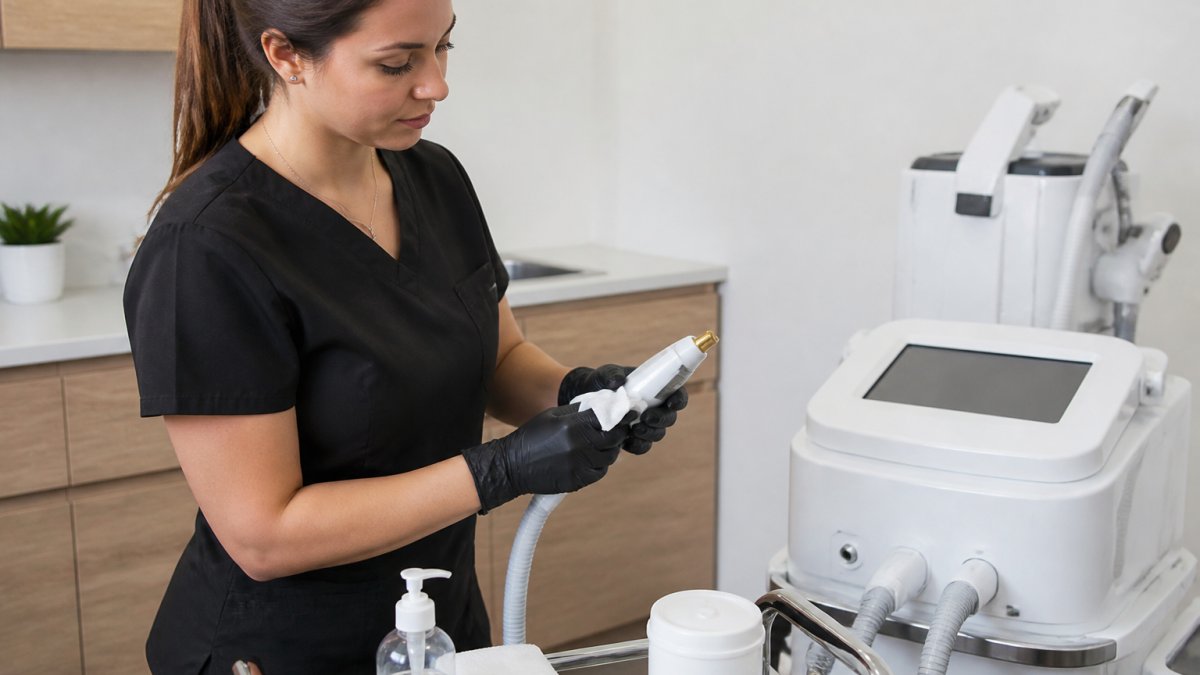
After every treatment, wipe the handpiece tip with a soft, damp cloth. Use only mild cleaning products approved by the manufacturer.
Handpiece care steps:
- Wipe the treatment window immediately after use
- Check for dust or debris in crevices
- Inspect the connector for corrosion
- Store the handpiece in its protective case
- Never drop or apply pressure to the handpiece
The optical window is delicate; scratches or buildup reduce laser output.
Store handpieces in a cool, dry place in a sealed case to protect from dust and temperature extremes.
Cleaning Equipment and Machine Surfaces Safely
Safe cleaning steps:
- Power off the equipment completely
- Allow it to cool for 10-15 minutes
- Use a soft, lint-free cloth slightly dampened with water
- For stubborn marks, add a drop of mild soap to the cloth
- Never spray liquid directly onto the machine
- Dry the surface with a clean cloth
- Never use solvents, alcohol, or harsh chemicals
Pay special attention to cooling vents and air intakes, blocked vents cause overheating. Check the manufacturer’s cleaning guide for your specific equipment, as different machines have different sensitivities.
Never submerge equipment in water or use pressure washers or steam cleaners. Designate one staff member responsible for weekly deep cleaning to ensure consistency. (Source: Australian Competition and Consumer Commission (ACCC) guidelines)
TGA Medical Device Maintenance Requirements
In Australia, aesthetic lasers and skin analysis systems are regulated as medical devices by the TGA. Your clinic must maintain records of all maintenance, servicing, and repairs to demonstrate compliance and protect patient safety.
Documentation you must keep:
- Maintenance and inspection logs with dates and findings
- Service records from qualified technicians
- Calibration certificates
- Electrical safety test results
- Equipment performance records
- Staff training records
- Incident reports (if any problems occur) Maintaining these comprehensive records establishes a reliable baseline for evaluating long-term device performance when choosing medical spa equipment.
Keep records for at least 5 years in secure, searchable format. Contact the TGA or your equipment supplier if unsure about compliance requirements.
Aesthetic Device Troubleshooting Guide
Troubleshooting must follow a clear decision tree: safe user checks first, then escalation to a qualified technician if the issue persists.
Safety-first troubleshooting principle:
Power off the device completely and allow it to cool for 10-15 minutes.
Common issue: Reduced laser or IPL output
Safe user checks:
- Verify the optical window or treatment tip is clean (dust reduces energy delivery by 5-20%).
- Check that the handpiece connector is fully seated.
- Confirm the cooling system is functioning.
- Review recent maintenance logs for intentional adjustments.
- Test on a known-good treatment parameter to isolate the issue.
If output remains low after these checks:
- Document the baseline output (if your device has a test-pulse function) and the current output.
- Note the date, time, and number of treatments performed since the last calibration.
- Contact your technician with this information. For laser systems, output degradation over time is normal; your technician can advise whether recalibration or component replacement is needed.
- Do not continue treating patients at reduced output without documenting the issue and informing them of potential efficacy concerns.
Common issue: Equipment won’t power on
Safe user checks:
- Verify the power outlet is functioning and the main power switch is on.
- Look for alarm lights, error codes, or messages on the display.
- Inspect the power cable for visible damage.
- Check your facility’s circuit breaker. If it has tripped, reset it. If it trips immediately, contact your electrician and technician.
If the device still won’t power on:
- Do not attempt to disassemble the power supply or internal components.
- Contact your technician. Power-on failures often indicate electrical faults that require professional diagnosis.
- If the device is under warranty, contact your supplier immediately to arrange service.
Common issue: Overheating warnings or automatic shutdown
Safe user checks:
- Power off immediately and allow 30 minutes cooling in a well-ventilated area.
- Check room temperature (devices operate safely between 16-35°C).
- Inspect cooling vents and air intakes for blockages.
- Check cooling fluid level and top up if needed.
- Clean or replace air filters if clogged.
If overheating persists after these checks:
- Do not resume treatment.
- Contact your technician. Persistent overheating may indicate a failing cooling pump, blocked internal channels, or a thermostat malfunction.
- Document the ambient temperature, number of treatments performed before the warning, and any recent maintenance.
Common issue: Unusual sounds, vibrations, or visible damage
Immediate action:
- Power off the device immediately and do not use it until a technician inspects it.
- Unusual sounds or vibrations indicate mechanical wear; visible damage requires professional assessment.
Safe user checks (visual inspection only):
- Check for loose cables or connectors. Gently press connectors to ensure they are fully seated.
- Inspect the handpiece for cracks, loose parts, or damage to the treatment window.
- Look for any visible burn marks, discolouration, or melting on the device body or cables.
- Check that all mounting brackets and feet are secure.
If damage is visible or sounds persist:
- Contact your technician immediately. Do not attempt repairs.
- If the device is under warranty, notify your supplier. Attempting repairs voids the warranty.
Escalation decision tree:
STOP USING THE DEVICE IMMEDIATELY if:
- Sparks, smoke, or burning smell is present
- The device won’t power on after a full reset and breaker check
- Overheating warnings persist after cooling and filter checks
- Unusual sounds or vibrations continue after visual inspection
- Visible damage (cracks, burns, melting) is present
- Error codes appear that are not listed in the manufacturer’s manual
- The device has been dropped or physically impacted
CONTACT YOUR TECHNICIAN WITHIN 24 HOURS if:
- Output remains low after cleaning and connector checks
- Cooling system indicators show abnormal readings
- Safety interlocks or emergency stop buttons don’t respond
- Software errors or display glitches occur
- Treatment results are inconsistent or declining
SCHEDULE ROUTINE MAINTENANCE if:
- The device is operating normally but is due for monthly or quarterly service
- Calibration or performance verification is overdue
- Consumables (filters, cooling fluid, protective windows) need replacement
Documentation and communication:
When you encounter a problem, document it in your maintenance log immediately:
- Date, time, and device name
- Symptom or error observed
- Troubleshooting steps attempted and results
- Whether the device was used or taken offline
- Name of technician contacted and date of service
Inform affected patients if their treatment was interrupted or if you suspect reduced efficacy. Transparency builds trust and protects your clinic legally.
Never attempt:
- Disassembling the device or opening sealed components
- Adjusting internal settings or calibration without manufacturer guidance
- Using non-approved cleaning products or solvents on electrical components
- Repairing electrical faults, power supplies, or cooling systems yourself
These actions void your warranty, create safety hazards, and may breach TGA compliance requirements. Always call a qualified, manufacturer-authorised technician for anything beyond visual inspection and basic cleaning.
Maintaining Peak Performance and Service Records
Peak performance means consistent, reliable treatment results. This requires more than just fixing problems when they occur.
Performance tracking steps:
- Document treatment parameters for each patient
- Note any variations in results or output
- Compare current performance to baseline measurements
- Schedule calibration checks if performance drifts
- Review trends in your maintenance log
Your service records tell the story of your equipment’s health. A clinic with detailed, consistent records demonstrates professional care.
Create a simple spreadsheet or use your clinic’s management software to track maintenance.
When problems do occur, detailed records help your technician diagnose issues faster. They can see the equipment’s history and spot patterns you might miss.
Proper equipment maintenance prevents costly downtime, protects patient safety, and extends equipment lifespan.
Frequently Asked Questions
What is the difference between preventive and corrective maintenance for medical devices?
Preventive maintenance involves scheduled inspections, cleaning, and servicing performed on a regular timetable to catch wear and damage before they cause equipment failure. Corrective maintenance is reactive, it addresses problems after they occur, often resulting in unexpected downtime and higher costs. For aesthetic clinic equipment, preventive maintenance extends device lifespan, ensures consistent treatment quality, and protects patient safety by identifying electrical, optical, or cooling issues early.
How often should aesthetic laser equipment be serviced to meet safety standards?
Service frequency depends on manufacturer instructions and the device type (laser, IPL, RF). Most aesthetic lasers require professional servicing annually or every 12-18 months, with daily and weekly staff inspections in between. Handpieces and optical components may need more frequent attention. Always follow the manufacturer’s maintenance schedule and keep detailed service records to demonstrate compliance with TGA medical device maintenance requirements and warranty obligations.
What daily maintenance tasks are essential for aesthetic laser handpieces?
Daily handpiece care includes visual inspection for cracks, discolouration, or loose connections; checking that the handpiece cools properly and fires without stuttering; and wiping the treatment window with a soft, damp cloth using mild cleaning products recommended by the manufacturer. Never immerse handpieces in water or use abrasive materials. Document each check to track performance trends and identify early signs of wear that warrant professional service.
What should I do if my aesthetic device shows signs of wear or reduced output?
First, perform a visual inspection of the handpiece, optical components, filters, and electrical connections for damage or debris. Check that cooling systems are functioning and that power-supply indicators show normal operation. If output verification shows reduced performance, consult the manufacturer’s troubleshooting guide and your service records to rule out simple issues like filter blockage. If problems persist, contact a qualified technician immediately rather than continuing treatments, as reduced output can compromise treatment consistency and patient safety.