Blog Details
Table of Contents
- Aesthetic Equipment for New Clinics: The 2026 Landscape
- Aesthetic Clinic Equipment Checklist: Core Devices to Budget For
- TGA Medical Device Registration Requirements for Clinic Equipment
- Laser Equipment Financing for Clinics: Options and ROI
- Insurance, Liability and Used vs New Equipment Risk
- Training, Maintenance and Post-Purchase Support
- Conclusion: Building Your Aesthetic Technology Stack
- Frequently Asked Questions
Last Updated: September 26, 2026
Aesthetic Equipment for New Clinics: The 2026 Landscape
Opening a clinic means every dollar has to work. Aesthetic equipment for new clinics is the single largest capital decision most practitioners make in their first two years, and it shapes what treatments you can offer, how patients perceive your practice, and how quickly you reach break-even. This guide from DermTech Devices walks through the devices worth budgeting for, the regulatory steps you cannot skip, and the financing and support questions that separate a smooth launch from an expensive lesson. (Source: Therapeutic Goods Administration’s medical device guidance)
Aesthetic Clinic Equipment Checklist: Core Devices to Budget For
An aesthetic clinic equipment checklist should cover three device categories: a multi-modality laser platform, a skin analysis and imaging system, and at least one body contouring or skin rejuvenation technology. Those three cover the majority of patient demand and give you room to expand services without buying again.
Multi-Modality Laser Platforms
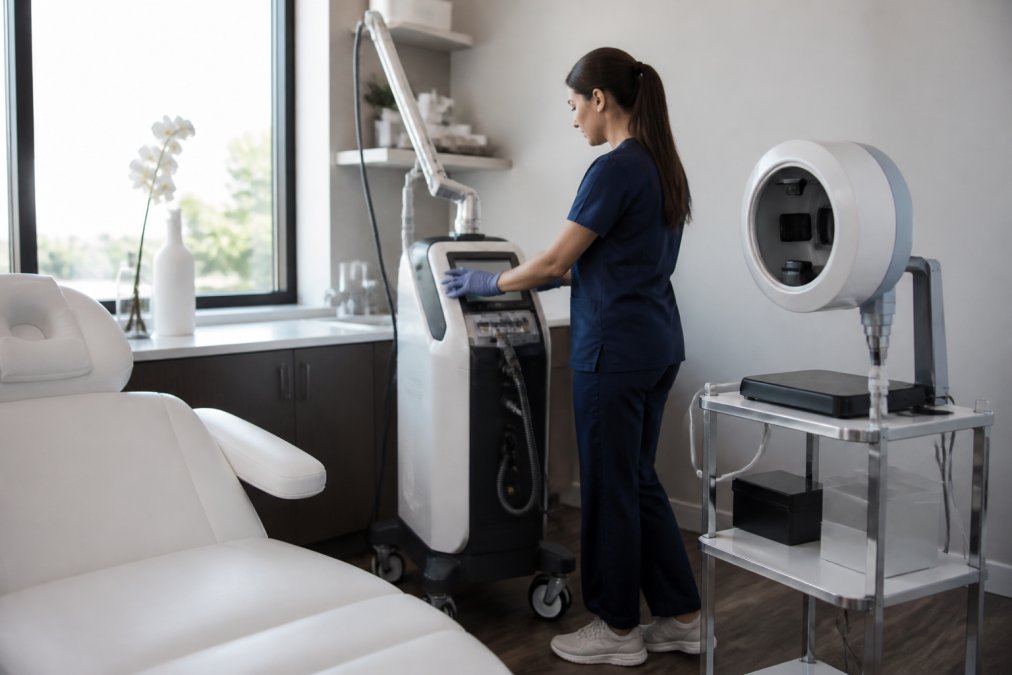
A multi-modality platform combines several wavelengths or technologies in one console. That matters for new clinics because it spreads your capital across more billable treatments. Look for platforms that handle diode laser hair removal, vascular and pigment correction, and skin rejuvenation from a single unit. DermTech Devices supplies advanced multi-modality laser platforms built for exactly this kind of treatment versatility.
Skin Analysis and Imaging Systems
Objective skin analysis changes the consultation. Instead of guessing at pigmentation depth or vascularity, you show the patient a multi-spectrum image and build a treatment plan around it. DermTech Devices offers next-generation skin analysis systems designed to support optimised treatment planning, which helps convert consultations into booked treatment packages.
Body Contouring and Skin Rejuvenation Technologies
Radiofrequency, ultrasound technology, microneedling and hydradermabrasion round out a modern offering. Body contouring and skin rejuvenation remain among the highest-demand non-invasive services, and they pair naturally with laser treatments for patients wanting a full plan.
| Device Category | Typical Use | Priority for New Clinics |
|---|---|---|
| Multi-modality laser platform | Hair removal, pigment, vascular, rejuvenation | Essential |
| Skin analysis and imaging | Consultation, treatment planning | High |
| Body contouring (RF, HIFEM) | Fat reduction, muscle toning | Medium |
| Skin rejuvenation (RF microneedling, hydradermabrasion) | Texture, tone, hydration | Medium |
| HIFU lifting | Non-invasive tightening | Optional |
TGA Medical Device Registration Requirements for Clinic Equipment
Every aesthetic device used on patients must be included on the Australian Register of Therapeutic Goods before it can be lawfully supplied. The TGA medical device registration requirements apply to your supplier, not just the manufacturer, so confirm the device’s ARTG inclusion before you sign anything.
Buying a device without verifying its ARTG inclusion can leave you unable to use it lawfully, and no warranty covers that. Check the number on the TGA register before payment, not after delivery.
Laser Equipment Financing for Clinics: Options and ROI
Laser equipment financing for clinics generally comes down to three routes: outright purchase, equipment finance or leasing, and vendor payment plans. Each affects your cash flow differently, and the right choice depends on how fast you expect to fill your appointment book, and how your accountant wants the asset treated at tax time.
The three structures, in plain terms
Outright purchase. You own the asset immediately, pay no interest, and claim depreciation and GST credits through your business activity statements. It suits clinics with capital reserves or an existing line of credit, and it gives you the lowest total cost of ownership over the device’s life.
EOFY and tax timing
End of financial year is when most clinics make their equipment decision, because the timing of purchase affects which financial year the deduction lands in. Small business entities may be able to immediately deduct the business portion of eligible assets under the instant asset write-off, subject to thresholds and eligibility rules that change, confirm the current position with your accountant or the Australian Taxation Office’s small business depreciation guidance before you sign.
Evaluating Aesthetic Device ROI
Evaluating aesthetic device ROI means comparing total cost of ownership against realistic treatment volume. Add the purchase or finance cost, consumables, servicing, insurance and staff training, then divide by the number of treatments you can realistically deliver each week at your price point.
A simple worked pattern most practitioners find useful:
- Total cost of ownership over three years = purchase or finance repayments + consumables + scheduled servicing + insurance loading + training.
- Realistic weekly treatments = your bookable slots, not the device’s theoretical maximum.
- Average revenue per treatment = your price minus consumable cost per session.
- Break-even weeks = total cost of ownership ÷ (weekly treatments × revenue per treatment).
Build your ROI model around 60% of your theoretical capacity. New clinics rarely fill a device’s maximum treatment slots in the first year, and a model that assumes full bookings will flatter the numbers badly. Run the same model at 40% and 80% to see how sensitive the decision is.
Questions to ask your financier
- Is the rate fixed or variable, and what is the comparison rate?
- What happens if the device needs replacement mid-term?
- Can I make additional repayments without penalty?
- Is the equipment itself the only security, or is a personal guarantee required?
- How does the structure interact with my GST registration and BAS cycle?
Get answers in writing before you commit, and have your accountant review the structure alongside your broader business plan.
Insurance, Liability and Used vs New Equipment Risk
Insurance and liability exposure varies by device, and this is where many new clinics under-plan. Higher-energy laser platforms typically attract higher premiums than non-invasive body contouring units, and your professional indemnity cover needs to match the treatments you actually offer. Confirm with your insurer that each specific device and procedure is covered before you advertise the service.
- New equipment: clear warranty, known service history, supplier support
- Used equipment: lower upfront cost, but verify calibration, parts availability and ARTG status
- Either way: confirm insurance covers the specific device and treatment
Training, Maintenance and Post-Purchase Support
Clinical training and ongoing support determine whether your equipment actually earns. A one-day workshop is not enough for a multi-modality platform. Ask what happens in month three, when a practitioner hits an unfamiliar skin type or a device throws an error mid-treatment.
What good training actually looks like
A credible training package for a multi-modality platform typically includes:
- Initial hands-on training at your clinic on your own device, not a demo unit, covering each modality, parameter selection and contraindication screening.
- Supervised treatment sessions with real patients before you fly solo, so you build confidence with feedback.
- Refresher and advanced sessions at defined intervals, commonly at 3, 6 and 12 months, covering new protocols and troubleshooting.
- Access to a clinical support line during treatment hours, so a question mid-appointment does not become a cancelled booking.
- Written protocols and parameter guides you can hand to a new staff member.
Maintenance and servicing: what to schedule
Device maintenance should be scheduled, not reactive. Laser components wear, cooling systems need attention, and calibration drift affects clinical outcomes. A supplier who provides technical support and a clear servicing schedule protects your uptime.
- Daily: cooling system check, handpiece inspection, lens and filter cleaning per the manufacturer’s instructions.
- Monthly: output verification against baseline parameters, cable and connector inspection.
- Quarterly to six-monthly: preventive service visit, calibration check, software updates.
- Annually: full safety inspection, replacement of wear items such as filters and lamps where applicable.
Bridging the gap between purchase and patients
This is the step most equipment guides skip, and it is where new clinics lose money. A device sitting idle is a finance repayment with no offsetting revenue. Before the device is installed, have a plan for how you will fill it:
- Identify the treatments it unlocks and price them against local competitors, not against the device’s marketing brochure.
- Train your front desk to describe each treatment in plain language and to book consultations, not just answer price questions.
- Build a launch offer around one signature treatment rather than promoting every modality at once.
- Capture before-and-after imagery from your first patients, with proper consent, for use in your marketing.
- Ask your supplier what marketing or patient-education material they provide, many supply branded collateral, and some offer launch support.
The device is only half the purchase. Training depth, servicing schedule, technical support response time and a patient-acquisition plan decide whether your equipment performs consistently over five years.
Insurance and liability checklist
Before you advertise any treatment, confirm with your insurer that the specific device and procedure are covered. Higher-energy laser platforms typically attract higher premiums than non-invasive body contouring units, and your professional indemnity cover needs to match the treatments you actually offer. Ask for written confirmation of:
- The device make and model, or at least the device category.
- The specific procedures you intend to perform.
- Whether consumables and replacement parts are covered.
- What happens if a device is damaged or stolen.
- Whether your policy requires a documented maintenance schedule.
Conclusion: Building Your Aesthetic Technology Stack
The hard part of equipping a new clinic is not choosing a device. It is building a technology stack that stays compliant, stays serviced, and stays busy. Get the ARTG status right, model the ROI honestly, and pick a supplier who will still answer the phone in year three.
Frequently Asked Questions
What equipment do you need for an aesthetic clinic?
A core setup includes a multi-modality laser platform for hair removal, pigmentation and vascular treatments, a skin analysis system for objective assessment, and body contouring or skin rejuvenation devices such as radiofrequency or ultrasound technology. Many new clinics start with one versatile platform that covers several high-demand treatments, then add specialised devices as patient demand grows. An aesthetic clinic equipment checklist helps you prioritise based on your treatment menu, space and budget.
How much does it cost to set up an aesthetic clinic?
Costs vary widely depending on the devices you choose, whether you buy new or used, and your financing arrangements. A single multi-modality platform may be the largest capital expenditure, while consumables, training and insurance add ongoing costs. Rather than quoting a single figure, work backwards from your expected treatment volume and price per session to estimate ROI. Speak with suppliers directly for current pricing and financing options.
What are the TGA requirements for aesthetic medical devices in clinics?
In Australia, medical devices must be included on the Australian Register of Therapeutic Goods (ARTG) before they can be legally supplied, unless a specific exemption applies. The Therapeutic Goods Administration (TGA) sets the classification rules, and devices are assessed based on risk. Clinics should verify that any aesthetic equipment they purchase has the appropriate TGA registration and ask suppliers for evidence of ARTG inclusion. Always check the TGA website for the current requirements.
How do I choose the right laser platform for a new aesthetic clinic?
Start by mapping your intended treatments: hair removal, pigmentation, vascular lesions, skin rejuvenation or body contouring. A multi-modality platform offers treatment versatility and can reduce the need for multiple devices. Check the wavelength, spot size, cooling system and pulse duration against your patient demographic. Also assess training, service warranty and technical support. Request a demonstration and speak to other clinics using the same platform to gauge real-world reliability.
What is the difference between medical-grade and beauty-grade aesthetic equipment?
Medical-grade devices are typically TGA-registered, have published clinical efficacy data, and are designed for use by trained healthcare professionals. Beauty-grade equipment may not be registered or may have lower power outputs, limiting the treatments you can offer. For a new clinic, medical-grade technology supports patient safety, clinical outcomes and insurance compliance. Always confirm the device’s regulatory status and intended use before purchasing.