Blog Details
Table of Contents
- Top Skin Analysis Systems Compared
- 1. DermTech Devices: Medical-Grade Systems Backed by Clinical Support
- 2. VISIA Gen8: Clinical-Grade Multi-Spectral Imaging
- 3. Zemits VeraFace: Affordable Professional Hardware
- 4. Derma Vision X AI: Entry-Level AI Integration
- 5. OBSERV 520x: Multi-Light Diagnostic Depth
- 6. Haut.AI: Advanced API-First AI Platform
- 7. Perfect Corp. AI Skin Diagnostic: Cloud-Based Mobile Access
- AI Skin Analysis Software Benefits for Your Practice
- How to Choose the Right Skin Analysis System for Your Clinic
- Frequently Asked Questions
Last Updated: September 4, 2026
Choosing the right diagnostic technology is one of the most consequential decisions an aesthetic practice can make. The gap between entry-level camera systems and clinical-grade imaging platforms is widening, driven by advances in AI-powered diagnostics, multi-spectral lighting, and longitudinal tracking software. This guide breaks down the leading systems on the market, what each one genuinely delivers in a clinical setting, and the practical business factors that determine whether a purchase translates into patient outcomes and revenue. (Source: the Australian Register of Therapeutic Goods (ARTG))
Top Skin Analysis Systems Compared
The most effective skin analysis systems combine high-resolution photographic capture with standardised lighting and software that quantifies skin conditions over time. Hardware quality and software consistency matter more than raw feature lists.
Quick Comparison Table
| System | Starting Price | Imaging Technology | Best For | Key Limitation |
|---|---|---|---|---|
| DermTech Devices | Contact for pricing | Multi-spectrum analysis | Clinics seeking medical-grade support and training | Pricing varies by configuration |
| VISIA Gen8 | $12,000-$15,000 | IntelliFlash, RBX Technology | Dermatology and research-grade practices | Significant capital investment |
| Zemits VeraFace | $6,000-$8,000 | High-definition camera | Small to medium aesthetic salons | Limited advanced diagnostic modes |
| Derma Vision X AI | $5,000-$7,000 | Dual-mode AI imaging | Entry-level AI adoption | Less frequent software updates |
| OBSERV 520x | Contact for pricing | Multiple diagnostic light modes | Clinics needing deep diagnostic capability | Requires dedicated treatment space |
| Haut.AI | Contact for pricing | API-first AI platform | Tech-forward custom integrations | Requires technical expertise |
| Perfect Corp. AI Skin Diagnostic | Contact for pricing | Cloud-based AI | Digital-first and remote consultations | Needs stable internet connectivity |
1. DermTech Devices: Medical-Grade Systems Backed by Clinical Support
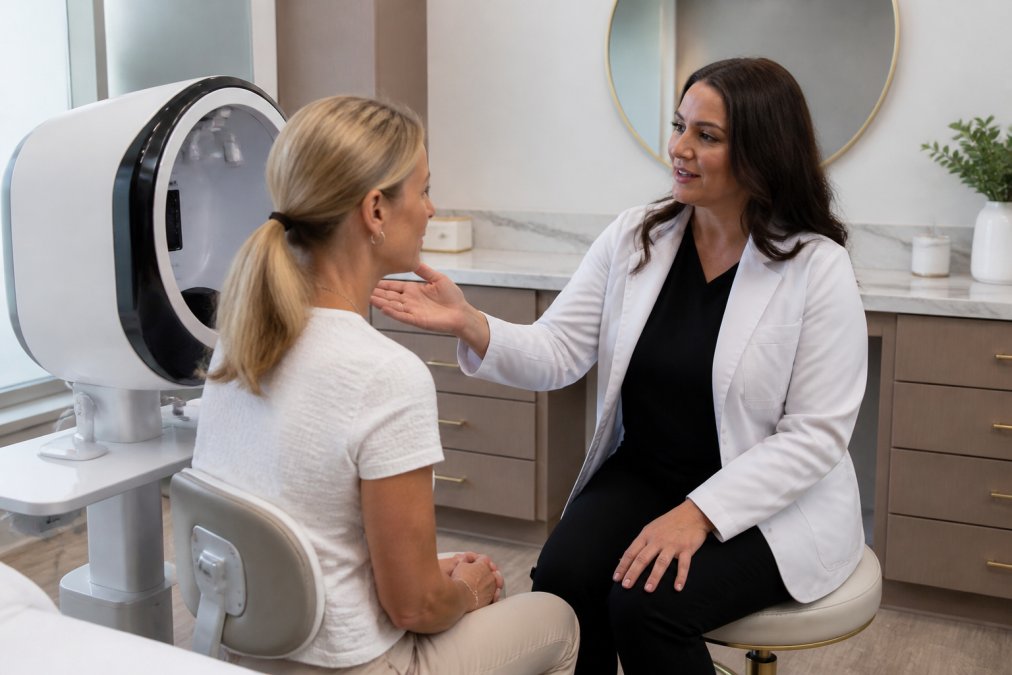
DermTech Devices was founded by a Registered Nurse with over 19 years of clinical experience. The systems are selected for reliability and safety, and supplied in collaboration with globally recognised medical technology brands, delivering precision-engineered hardware rather than rebranded consumer cameras.
Training and ongoing support are built into the relationship, ensuring the imaging system is used effectively and remains supported long after installation.
Clinics of any size that want medical-grade diagnostic capability without sacrificing access to responsive training, maintenance, and a supplier who remains accountable after the sale.
The multi-spectrum skin analysis approach supports optimised treatment planning and patient education. Contact DermTech Devices directly for a current quote tailored to your clinical workflow.
2. VISIA Gen8: Clinical-Grade Multi-Spectral Imaging
VISIA Gen8 is the industry standard for clinical research and validation. It uses IntelliFlash technology for consistent lighting and RBX Technology to analyse subsurface melanin and vascularity, revealing data that standard photography cannot.
The system provides automated skin type classification and 3D skin surface viewing, making it a strong educational tool. At $12,000 to $15,000, it is a significant capital investment suited to dermatology clinics and high-end practices with sufficient patient volume.
3. Zemits VeraFace: Affordable Professional Hardware
Zemits VeraFace, priced between $6,000 and $8,000, combines a high-definition camera with automated analysis reports and client database management. The integrated software tracks history and produces before-and-after comparisons for demonstrating treatment efficacy.
VeraFace does not offer advanced research-grade diagnostic modes. It is designed for commercial aesthetics rather than medical dermatology, making it adequate for practices focused on cosmetic treatments.
4. Derma Vision X AI: Entry-Level AI Integration
Derma Vision X AI, priced between $5,000 and $7,000, combines AI-driven algorithms with dual-mode imaging. Its compact design suits smaller treatment rooms.
Automated report generation saves consultation time. Software updates may be less frequent than premium competitors. This is a sensible starting point for practices testing AI-powered analysis.
5. OBSERV 520x: Multi-Light Diagnostic Depth
OBSERV 520x offers multiple diagnostic light modes (Daylight, Cross-Polarised, UV) that reveal skin conditions at different depths, valuable for clinics treating diverse skin concerns.
Comparative analysis software overlays images to track changes precisely. The system requires dedicated space, suiting practices with a designated consultation room.
6. Haut.AI: Advanced API-First AI Platform
Haut.AI is an API-first AI platform delivering deep learning diagnostics through your own software or website, highly customisable for tech-forward clinics. (Source: guidelines from the Australian College of Aesthetic Medicine)
The platform validates performance across multi-ethnic skin tones and requires technical expertise for integration. Haut.AI complements hardware-based systems rather than replacing them.
7. Perfect Corp. AI Skin Diagnostic: Cloud-Based Mobile Access
Perfect Corp. is a B2B SaaS platform performing real-time skin assessments through mobile or web interfaces, detecting 15+ skin concerns. It suits digital-first clinics offering remote consultations.
The system requires stable internet connectivity and produces less reliable results than controlled clinical capture. Perfect Corp. complements in-clinic hardware but does not replace standardised imaging.
AI Skin Analysis Software Benefits for Your Practice
Integrating AI skin analysis software into your consultation workflow delivers objective longitudinal tracking. Patients see quantified skin metrics demonstrating improvement, supporting treatment plan personalisation and increasing client acceptance.
Use the first consultation capture as the baseline and schedule a follow-up capture at the six-week mark. Most visible treatment outcomes take at least one full skin cycle to appear, so a six-week comparison is the earliest point where images will show meaningful change.
A professional imaging system elevates perceived quality and supports premium pricing. Patients who see their progress are more likely to continue treatment. The software generates consultation reports documenting clinical rationale.
How to Choose the Right Skin Analysis System for Your Clinic
Match the technology to your clinical scope, patient demographics, and operational reality. Avoid purchasing the most expensive system without considering staff capability and patient volume.
Define your primary use case. Dermatology practices need research-grade imaging; aesthetic clinics may prioritise client management features. If treating diverse skin tones, prioritise systems with multi-ethnic validation.
The most expensive system in the room is worthless if your nurses cannot operate it confidently. Factor staff training time into your purchasing decision and ask the supplier what ongoing support actually looks like. A one-day workshop is rarely sufficient for a team to become proficient.
Budget for maintenance, calibration, software subscriptions, and staff training over five years. Verify service response times, parts availability in Australia, and data export compatibility with your EMR or practice management software.
The landscape of skin analysis systems in 2026 rewards practices that think beyond the hardware purchase. The best system for your clinic is the one that produces repeatable, accurate images your team can use confidently, integrates with your existing workflow, and comes from a supplier who remains accountable long after installation. As the Therapeutic Goods Administration’s guidance on medical device compliance makes clear, regulatory compliance for aesthetic equipment is non-negotiable in Australia, so verify that any system you consider meets the relevant standards before purchase.
For practices weighing whether objective skin analysis data translates into revenue, the answer lies in the consultation itself. When a patient sees quantified evidence of pigmentation, vascularity, or texture changes, the conversation shifts from whether they need a treatment to which treatment will deliver the best result. That shift supports higher treatment acceptance rates and more consistent client retention, which is why clinical imaging research from peer-reviewed dermatology journals consistently highlights the value of standardised photography in treatment planning.
Most clinics benefit from a tiered approach. Entry-level systems suit practices testing imaging value. Established clinics with higher volumes justify VISIA Gen8 or OBSERV 520x. Digital-first practices should explore Haut.AI or Perfect Corp. as complementary tools.
Whichever direction you take, prioritise the factors that affect your daily operations: staff training requirements, integration with your existing systems, and the supplier’s commitment to ongoing support. As standards guidance from the International Skin Imaging Collaboration demonstrates, consistency in image capture is the foundation of meaningful skin analysis, and consistency comes from well-trained staff using reliable equipment.
Selecting the right diagnostic technology is a significant decision that affects your clinical outcomes, your staff’s daily workflow, and your practice’s long-term growth. DermTech Devices understands this because we are led by a Registered Nurse with over 19 years of experience in the field. Our medical-grade systems are selected for performance, reliability, and safety, and they come with the training and ongoing support that ensures your investment delivers results. Partner with us to find a skin analysis solution that fits your practice’s needs and budget.
Frequently Asked Questions
What features should a professional skin analysis system include in 2026?
Modern skin analysis systems should offer high-resolution imaging, AI-powered diagnostics for detecting pigmentation and vascularity, multi-spectral or multi-light modes for depth analysis, automated reporting, and integration with your clinic’s existing software. Clinical validation and repeatability matter for tracking treatment progress. Systems supporting longitudinal tracking allow you to demonstrate results to clients, which improves retention and justifies treatment recommendations.
How does AI-driven skin analysis improve patient consultation outcomes?
AI skin analysis software benefits include objective data that replaces subjective assessment, reducing consultation time and building client confidence. Automated reports show specific metrics such as pore size, pigmentation distribution, and skin texture mapping, enabling personalised treatment plans. Visual evidence from the system helps clients understand their skin condition, increasing treatment uptake and compliance. Data-driven recommendations also support your clinical decision-making and reduce second-guessing during follow-up consultations.
Is upgrading to objective skin analysis data worth the investment for a small aesthetic clinic?
Yes, if your current practice relies on visual assessment alone. Objective skin analysis systems help small clinics compete with larger centres by enabling precise before-and-after documentation, which drives client satisfaction and referrals. Even a modest practice can justify the investment through improved treatment planning accuracy and faster consultations. However, consider your staff’s comfort with technology and the time required for proper training before committing.
What does TGA medical device compliance for aesthetic equipment actually mean for my clinic?
TGA (Therapeutic Goods Administration) compliance means the device meets Australian safety and performance standards for medical use. Compliant systems are registered with the TGA, ensuring they’ve undergone rigorous testing for electromagnetic safety, optical safety, and software security. For your clinic, this means reduced liability, patient confidence, and compatibility with professional indemnity insurance. Always verify a system’s TGA registration before purchase and confirm ongoing compliance during maintenance.
How do I know if a skin analysis system will actually perform consistently over time?
Look for systems with documented repeatability studies and clinical validation data. Hardware-based systems with controlled lighting (such as multi-spectral or multi-light modes) typically show higher repeatability than mobile apps. Check whether the manufacturer provides calibration protocols and maintenance schedules. Request case studies or references from similar-sized practices, and ask about warranty coverage and technical support availability. Long-term reliability depends on regular calibration, staff training, and responsive after-sales support.