Blog Details
Table of Contents
- What to Look For in Australian Aesthetic Systems Alternatives
- Comparison Table: Multi-Modality Platforms and Clinic Software
- How to Evaluate Medical Laser Supplier Support Before You Buy
- TGA Medical Device Registration Requirements Explained
- Aesthetic Clinic Equipment Leasing in Australia: Is It Right for You?
- Total Cost of Ownership: What the Price Tag Doesn’t Show
- Software Integration: EMR, CRM, and Inventory Management
- Frequently Asked Questions
Last Updated: September 19, 2026
What to Look For in Australian Aesthetic Systems Alternatives
When clinics outgrow their current setup, the search for Australian Aesthetic Systems alternatives usually starts with one question: what will actually keep working after the warranty period ends? This guide from DermTech Devices breaks down what separates a dependable multi-modality platform from one that sits idle. We cover medical-grade technology, TGA medical device registration requirements, leasing, total cost of ownership and software integration.
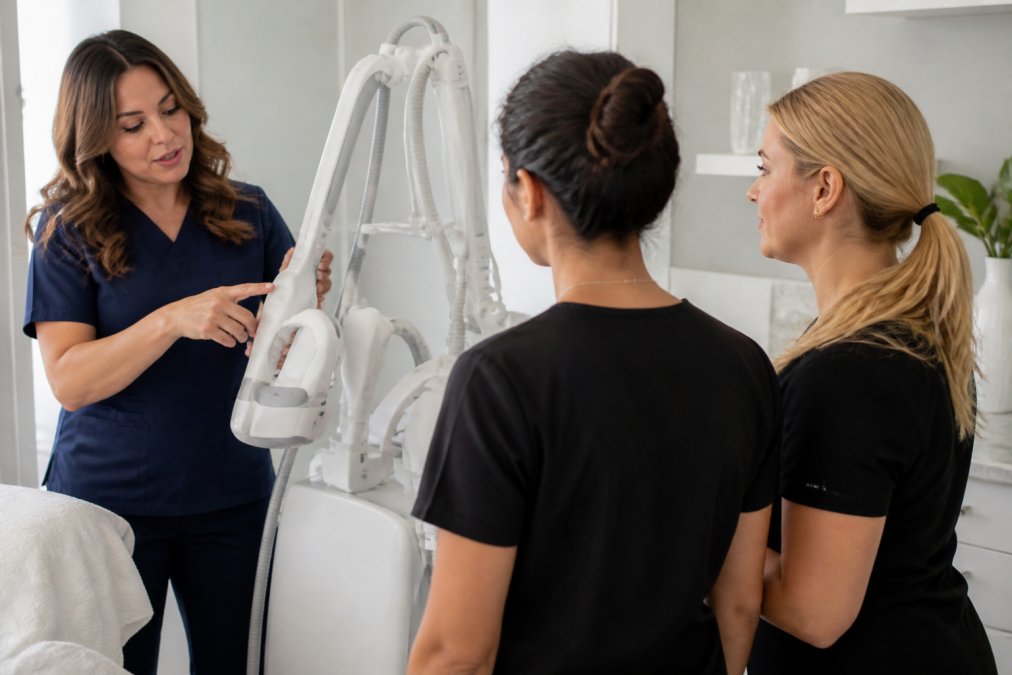
The strongest alternatives are judged on three things: verified TGA registration, documented training, and support that continues after commissioning.
Medical-Grade Technology and Multi-Modality Platforms
A multi-modality platform combines several treatment technologies in one unit, so a clinic offers more services from a single investment, one room, one device, several billable protocols.
Three features separate serious platforms from entry-level units:
- Verified registration with the Therapeutic Goods Administration for the device’s intended use
- Documented clinical efficacy and treatment protocols, not just marketing claims
- Device reliability backed by a maintenance schedule and spare-parts pathway
Comparison Table: Multi-Modality Platforms and Clinic Software
Most comparison content repeats market reports or a vendor’s brochure. Clinics need a neutral, feature-by-feature view of what each option does, and what it costs to keep running after year one.
| Option | Type | Standout Strength | Watch Out For |
|---|---|---|---|
| DermTech Devices | Multi-modality platforms and skin analysis | Medical-grade systems, RN-founded, support focus | Pricing on application |
| Pabau | Clinic software | Integrated EMR, bookings, inventory | Reporting has a learning curve |
| Consentz | Consent and records software | Digital consent, clinical photography | Lighter on marketing tools |
| Phorest | Clinic management software | Booking, loyalty, retention tools | May need extra tools for clinical notes |
Feature-by-Feature: What Actually Separates These Options
The decision usually turns on a few capabilities that only surface once you map them against your own workflow.
Hardware platforms (multi-modality devices)
- Treatment modalities per unit. A true multi-modality platform covers several protocols, skin surface treatment, pigmentation, vascular work, submental lifting, from one console. Entry-level units often claim multi-modality but support only one or two at clinical grade.
- Skin analysis integration. Next-generation analysis captures objective baselines (pigmentation, vascularity, texture) against the patient record, making progress demonstrable at the next visit rather than anecdotal.
- Calibration and servicing interval. Ask for the documented interval in writing. A shorter interval means more downtime and higher lifetime cost, even if the sticker price looks lower.
- Spare-parts pathway. Where are parts held, and what is the typical lead time? A device with no local parts pathway can sit idle for weeks.
Clinic software
- EMR depth. Pabau and Phorest both handle clinical notes, but customisation for aesthetic-specific fields (treatment areas, settings, before/after photography) varies. Consentz leans into consent and photography rather than full charting.
- Consent workflow. Consentz is built around digital consent and clinical photography, suiting clinics that prioritise documentation. If consent is bolted on elsewhere, expect double entry.
- Marketing and retention. Phorest excels at booking, loyalty and rebooking prompts. Pabau covers bookings, notes and inventory in one system, but reporting has a learning curve. Consentz is lighter on marketing.
- Inventory management. Only some systems track consumables against treatment volume. If yours does not, you will reorder reactively and risk disrupted treatment days.
Total Cost of Ownership: The Column Most Comparisons Leave Out
No public comparison table shows the five-year cost, the biggest gap in the current landscape, and the number that decides whether an investment pays for itself.
| Cost Category | What It Covers | Why It Catches Clinics Out |
|---|---|---|
| Consumables | Gels, tips, filters, handpiece parts | Scales with treatment volume, not with the sticker price |
| Servicing | Scheduled maintenance and calibration | Often excluded from warranty after year one |
| Software subscription | Per-user or per-location monthly fees | Rises quietly as you add staff or rooms |
| Training | Initial and refresher certification | Staff turnover repeats the cost |
| Downtime | Lost bookings during repairs | Rarely budgeted at all |
Post-Purchase Support: The Evaluation Most Buyers Skip
Most content focuses on the sale; the gap is evaluating what happens after commissioning.
- Guaranteed response time. Ask for it in writing, not verbally.
- Who performs repairs. In-house team, authorised partner, or third party? The answer changes your downtime risk.
- Warranty terms. What is covered, for how long, and what voids it (for example, using non-approved consumables or servicing by an unauthorised technician).
- Refresher training. Is it included, or charged per session? With typical staff turnover in aesthetic clinics, this line adds up.
- Software updates. Are they included in the subscription, or billed as a separate upgrade?
How to Evaluate Medical Laser Supplier Support Before You Buy
Evaluate medical laser supplier support before you buy: ask for response times in writing, speak to existing clinics, and confirm who services the device in your region.
Ask every supplier these questions:
- What is the guaranteed response time for a fault?
- Who performs repairs, and where are the parts held?
- Is technical support included, or billed hourly?
- What happens if the device is down for a week?
Training and Certification: What to Expect
Training should cover more than switching the device on: treatment protocols, safety standards, contraindications and supervised hands-on practice.
TGA Medical Device Registration Requirements Explained
TGA medical device registration is how the Therapeutic Goods Administration assesses a device for its intended clinical use before lawful supply in Australia. Sponsors must hold appropriate evidence and include the device on the Australian Register of Therapeutic Goods (ARTG).
How Devices Are Classified
The TGA classifies devices by risk, and the class determines how much assessment is required before supply. Aesthetic devices typically sit in the lower-to-mid classes, but classification depends on intended purpose, invasiveness of the energy delivered and duration of body contact. A device marketed for a superficial cosmetic effect may sit in a different class from one marketed for a clinical dermatological indication, even with similar hardware.
Conformity Assessment and the Manufacturer’s Role
Before ARTG inclusion, the manufacturer must hold conformity assessment evidence, typically certification from a recognised body, or equivalent evidence accepted by the TGA. The sponsor (the entity importing or supplying the device in Australia) holds that evidence and ensures the device keeps meeting the essential principles for safety and performance.
Sponsor Obligations You Should Know About
Sponsors carry ongoing obligations, not just one-off registration:
- Keeping the ARTG entry current, details change, and the entry must reflect the device as supplied.
- Reporting adverse events to the TGA within required timeframes.
- Recalls and corrective actions, the sponsor must have a process to notify and remediate if a safety issue arises.
- Record-keeping, evidence must be retained and available for audit.
Ask any supplier who their sponsor is and confirm the name appears on the ARTG entry. If the supplier is the sponsor, that is fine, the obligations still apply.
What to Verify Before You Commit
- ARTG entry number and intended purpose. Match it against your service list.
- Sponsor name. Confirm it matches the entity you are contracting with.
- Conformity assessment evidence. Ask to see the certification or equivalent evidence.
- Current status. ARTG entries can be suspended or cancelled. Verify the entry is active, not just that it once existed.
Buying an unregistered device, or one registered for a different intended use than your service list, exposes your clinic to regulatory action and voids your insurance cover. Always verify the ARTG entry before you commit.
Requirements, classifications and fees change, so confirm current obligations directly with the Therapeutic Goods Administration rather than relying on a supplier’s summary. The TGA publishes current guidance on classification and conformity assessment, and that is the source to check against any supplier claim.
Aesthetic Clinic Equipment Leasing in Australia: Is It Right for You?
Leasing spreads a platform’s cost across its working life instead of paying upfront, preserving cash flow and keeping capital free for staffing and fit-out.
Leasing suits you if:
- You want the device earning revenue before the full cost is settled
- You expect to upgrade within three to five years
- You would rather keep cash reserves for operations
Before signing any lease, add up the total payments plus servicing and consumables, then compare that figure against your realistic monthly treatment volume. If the maths only works at full capacity, the lease is too aggressive.
Total Cost of Ownership: What the Price Tag Doesn’t Show
Total cost of ownership is the full cost across a device’s life: purchase or lease payments, consumables, servicing, training, downtime and replacement. The sticker price is often the smallest part.
Costs that buyers routinely underestimate:
| Cost Category | What It Covers | Why It Catches Clinics Out |
|---|---|---|
| Consumables | Gels, tips, filters, handpiece parts | Scales with treatment volume |
| Servicing | Scheduled maintenance and calibration | Often excluded from warranty |
| Training | Initial and refresher certification | Staff turnover repeats the cost |
| Downtime | Lost bookings during repairs | Rarely budgeted at all |
Software Integration: EMR, CRM, and Inventory Management
Software integration determines whether your clinical and business data live in one place or five. EMR integration keeps treatment records and consent forms attached to the right patient; CRM drives recall reminders and rebooking; inventory management tracks consumables so you reorder before a treatment day is disrupted.
Frequently Asked Questions
What should I look for when choosing a medical laser supplier?
Prioritise suppliers that provide documented training certification, responsive technical support, and clear device maintenance schedules. Ask for references from clinics similar to yours and confirm the supplier can demonstrate how their equipment meets regulatory approval standards. Evaluate whether the platform supports clinical workflow integration, including EMR and inventory management, so your team can adopt it without disruption. A supplier that offers ongoing support beyond installation is more likely to protect your investment.
How do I verify if an aesthetic device is TGA-approved?
Check the Australian Register of Therapeutic Goods (ARTG) on the TGA website. Search the device name or sponsor details to confirm it is listed and that the listing is current. Ask the supplier for the ARTG number and the scope of the registration. TGA medical device registration requirements vary by device class, so confirm the specific model you are considering is covered. If a supplier cannot provide an ARTG number, treat that as a significant red flag.
What are the benefits of multi-modality laser platforms for clinics?
Multi-modality platforms let you offer skin thermal treatment, skin surface treatment, and submental lifting from one device, which reduces the need to buy separate machines. For clinics expanding service offerings, this supports revenue growth without doubling your equipment footprint. It also simplifies training because staff learn one interface. However, confirm you will actually use the additional modalities, otherwise a single-modality system may be more cost-effective for your patient mix.
How does clinical support impact the ROI of aesthetic equipment?
Clinical support directly affects how quickly your team can use the device safely and efficiently. If training is a one-day workshop with no follow-up, staff may avoid using advanced features, leaving capacity idle. Suppliers that provide ongoing clinical workflow guidance, treatment protocols, and refresher training help you maintain consistent patient outcomes. Before buying, ask what post-purchase support looks like in months three, six, and twelve, and get it in writing.
What are the key differences between aesthetic device suppliers in the local market?
Suppliers differ in device reliability, the range of modalities offered, training depth, and how quickly they respond to maintenance requests. Some focus on high-volume platforms for multi-practitioner centres, while others specialise in affordable medical-grade systems for smaller clinics. Ask each supplier for their device maintenance schedule, technical support response times, and whether they offer leasing options. Comparing total cost of ownership over five years reveals differences that the upfront price alone will not show.