Blog Details
Table of Contents
- What to Look for When Buying Advanced Skin Analysis Equipment
- Top Advanced Skin Analysis Equipment Options for 2026
- AI Skin Diagnostic Software Features Explained
- TGA Medical Device Compliance for Aesthetic Equipment
- Integrating Clinical Skin Analysis Workflow Into Your Practice
- ROI and Total Cost of Ownership Analysis
- How to Choose the Right System for Your Practice Size
- Frequently Asked Questions
Last Updated: October 4, 2026
What to Look for When Buying Advanced Skin Analysis Equipment
Investing in advanced skin analysis equipment means selecting a diagnostic tool that defines patient consultations, treatment tracking, and revenue growth. At DermTech Devices, we understand practices need systems balancing clinical depth with usability, equipment your team will actually use daily.
The right system balances cost against capability for your practice size, patient demographic, and treatment focus.
Critical factors include: diagnostic depth (subsurface detection of pigmentation, wrinkles, acne, texture); workflow integration with practice management software; automation and analysis speed; professional reporting for patient education; training and ongoing support; and TGA compliance for medical device use in Australia.
The equipment you choose should feel like it was designed for how you actually work, not something you have to adapt your workflow around.
Top Advanced Skin Analysis Equipment Options for 2026
DermTech Devices Multi-Modality Platforms
DermTech Devices leads with medical-grade multi-modality systems engineered for multi-spectrum skin analysis, capturing surface and subsurface conditions across multiple light wavelengths. Founded by a Registered Nurse with 19 years of clinical experience, these systems enhance treatment capabilities and improve patient outcomes.
DermTech systems are designed for optimised treatment planning via multi-spectrum skin analysis, supporting long-term practice growth and consistent clinical results.
DermTech Devices offers ongoing support to ensure equipment stays productive.
Best for: Multi-practitioner dermatology centres, high-volume aesthetic practices, and clinics serious about objective treatment planning and patient retention through data-driven consultation.
Pros:
- Advanced multi-modality imaging captures both surface and subsurface skin conditions
- Optimised treatment planning via multi-spectrum skin analysis
- Precision engineering ensures consistent, reproducible results across patient visits
- Founded by a Registered Nurse, clinical credibility built into product design
- Support for long-term practice growth
Cons:
- Higher initial investment reflects the advanced technology and support model
Canfield VISIA Complexion Analysis System
Canfield VISIA is the gold standard in clinical dermatology, using multi-spectral imaging and RBX technology to identify melanin and haemoglobin beneath the skin surface. It excels at longitudinal tracking, quantifying changes in pigmentation, wrinkles, and pore size over time. The tradeoff: higher cost, dedicated space required, and steeper learning curve.
Best for: Dermatology clinics and high-end aesthetic practices where clinical credibility and longitudinal patient tracking drive business decisions.
Pros:
- Industry-leading clinical accuracy with multi-spectral imaging
- Extensive longitudinal tracking of patient progress over months and years
- RBX technology quantifies melanin and haemoglobin for objective assessment
Cons:
- High capital investment limits accessibility for smaller practices
- Requires dedicated booth space
Zemits VeraFace for Medical Spas and Salons
Zemits VeraFace offers high-resolution imaging with customisable reports for client education. It excels at visual storytelling and conversion for salons and medical spas, but lacks subsurface diagnostic depth for complex dermatological assessment.
Best for: Beauty salons, medical spas, and clinics prioritising client education and visual consultation over deep clinical diagnostics.
Pros:
- Intuitive software interface minimises training time
- Strong visual reporting for client education and treatment justification
- Customisable reports enhance perceived value of consultation
Cons:
- Requires dedicated hardware space in your clinic
- Limited subsurface diagnostic capability compared to clinical systems
Sylton OBSERV 520 Multi-Light Imaging Booth
The OBSERV 520 uses six light modes to reveal UV damage, vascular issues, pigmentation depth, and texture. Standardised booth positioning ensures reproducible, comparable images across visits. It requires space and investment but justifies cost for practices treating complex skin conditions.
Best for: Aesthetic clinics focusing on skin rejuvenation and corrective treatments where diagnostic depth informs treatment planning.
Pros:
- Six light modes reveal skin conditions invisible to standard imaging
- Standardised booth positioning ensures reproducible, comparable images
- Advanced software enables detailed comparative analysis
Cons:
- Significant investment cost
- Requires dedicated booth space
Imagica II AI Skin Analysis Machine
Imagica II offers AI-powered diagnostics at mid-range pricing, using 3D imaging and automated analysis with product recommendations. The AI improves over time, but requires regular software updates to maintain accuracy.
Best for: Mid-sized clinics and salons wanting AI-driven diagnostics without the investment or space requirements of clinical booths.
Pros:
- Competitive mid-range pricing
- Integrated AI diagnostic features reduce manual interpretation
- 3D imaging provides depth analysis
Cons:
- Requires regular software updates to maintain AI accuracy
- Less clinical depth than dedicated dermatology systems
Mid-Range and Budget-Friendly Alternatives
Entry-level options include: ScanSkinAI (software-only, subscription model, image quality dependent on camera); VisagePro AI Skin Analyzer (includes training, basic features, low investment); DermaScope AI (similar entry-level functionality); and ImagePro Skin Analysis System (flexible financing and rental options).
Budget alternatives serve as proof-of-concept tools for practices uncertain about skin analysis ROI.
AI Skin Diagnostic Software Features Explained
AI-powered diagnostics transform images into actionable clinical data. Automated detection identifies acne, pigmentation, wrinkles, pore size, hydration, redness, and texture in seconds. Accuracy depends on training data diversity, systems trained on diverse skin tones perform more reliably across patient populations.
Severity scoring quantifies concerns numerically (e.g., “pigmentation severity: 6.2/10”), providing objective baseline for measuring treatment progress. Longitudinal comparison tracks changes over time, quantifying improvement (e.g., “wrinkle depth reduced by 18%”) to justify ongoing treatment and build patient loyalty.
Product recommendation engines suggest skincare or treatments based on detected conditions, driving revenue if your practice sells skincare. Professional reporting makes analysis visible to patients, showing magnified skin with highlighted concerns to justify treatment recommendations. Visual evidence of surface irregularities often serves as the primary catalyst for patients to pursue skin texture improvement treatments.
The limitation of all AI diagnostics: the system is only as good as the input image. Poor lighting, incorrect positioning, or camera quality issues produce unreliable analysis. Training your staff on proper image capture technique is essential.
TGA Medical Device Compliance for Aesthetic Equipment
In Australia, skin analysis equipment falls under TGA regulatory framework. Devices for diagnostic assessment are typically Class II or III medical devices. Verify manufacturers have TGA approval or registration, equipment without proper status exposes your practice to regulatory risk.
Maintain records of device maintenance, staff training, and adverse events. For imported equipment, confirm TGA registration and Australian-compliant labelling.
Integrating Clinical Skin Analysis Workflow Into Your Practice
Installing equipment is straightforward. Integrating it into your clinical workflow is where most practices struggle, and where the real value emerges or gets lost.
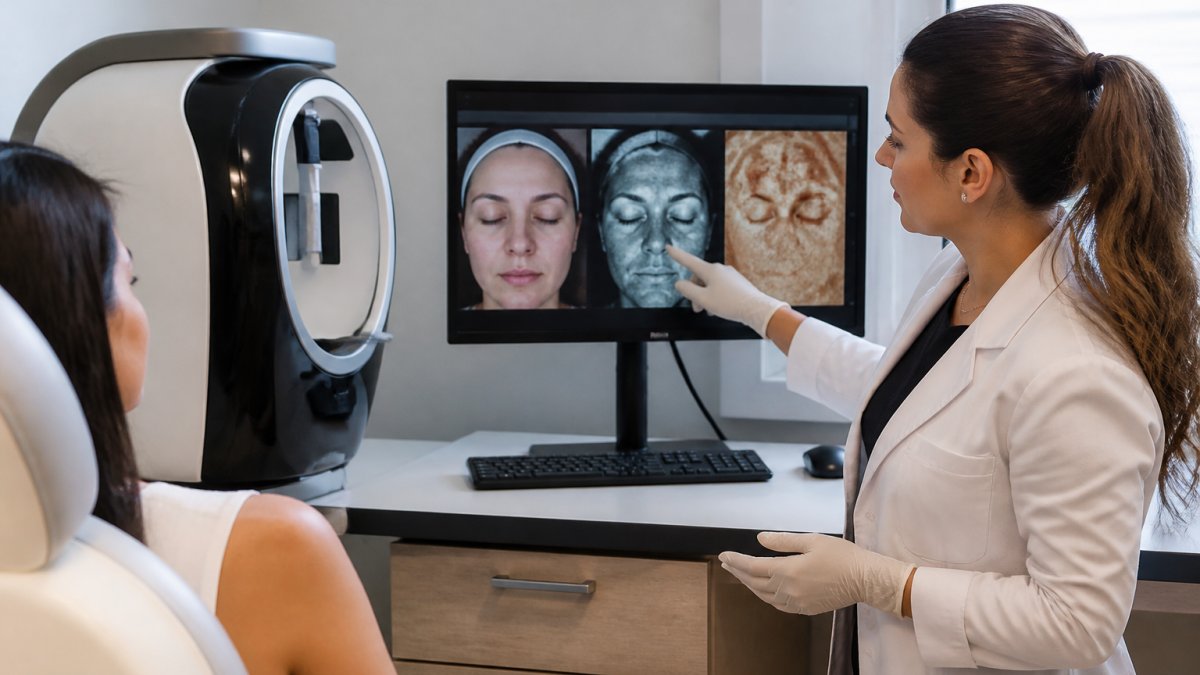
Start by defining the workflow: at what point in the patient journey do you perform skin analysis? Before consultation, during, or after? The timing affects how you use the data. Early analysis informs your consultation. Late analysis documents treatment planning.
Train your staff on image capture technique first. Poor technique produces poor data. Consistent lighting, correct patient positioning, and proper camera distance are non-negotiable. Spend time on this, it’s the difference between reliable diagnostics and wasted equipment.
Integrate the system with your practice management software if possible. Manual data transfer between systems creates errors and friction. When skin analysis data flows directly into patient records, your entire team works with current information. Treatment notes reference objective baseline data. Follow-up appointments compare against previous scans automatically.
Build reporting into your consultation process. Don’t just run a scan and move on. Show the patient their results. Explain what the numbers mean. Use the visual proof to justify treatment recommendations.
Use the longitudinal data to demonstrate results. After treatment, scan again and show the patient the improvement. This proof of efficacy drives patient retention and referrals. It also justifies the cost of the equipment, if skin analysis increases treatment acceptance by 15-20%, the system pays for itself quickly.
ROI and Total Cost of Ownership Analysis
Equipment cost is only the beginning. Total cost of ownership includes maintenance, software updates, staff training, and space allocation. Understanding the full picture prevents surprises.
Capital cost varies dramatically by system. DermTech Devices systems represent investment in advanced multi-modality technology, with pricing reflecting the clinical capability and ongoing support model. Pricing depends on quantity, dates, and delivery. Please check our website for current prices or a quote.
Annual maintenance typically runs 5-10% of equipment cost. This covers software updates, calibration, and repairs. Budget $500-$4,000 annually depending on system complexity.
Staff training is often underestimated. Initial training might take 8-16 hours per staff member. Budget $2,000-$5,000 for comprehensive training across your team. Ongoing training as new features release adds another $1,000-$2,000 annually.
Space allocation has hidden cost. A dedicated imaging booth requires roughly 2 x 2 metres of climate-controlled space. In premium locations, this space costs money. Calculate the opportunity cost: what revenue would that space generate if used for treatment?
Revenue impact is the offset. Objective skin analysis can increase treatment acceptance, generating additional revenue and justifying equipment investment.
The payback period for systems can vary, assuming you actively use the equipment and integrate it into your consultation process.
How to Choose the Right System for Your Practice Size
Solo practitioners or small two-person clinics rarely need clinical-grade systems like VISIA. You’re better served by mid-range equipment like Imagica II or Zemits VeraFace. These systems provide genuine diagnostic capability without overwhelming complexity or cost.
3-5 practitioner clinics benefit from systems that integrate across your team.
Multi-location practices need systems that sync across locations. Cloud-based reporting and centralised patient records become critical. This is where practice management integration matters most, you want one system of record, not separate data at each location.
High-volume aesthetic practices focused on retail skincare benefit from systems with strong visual reporting and product recommendation engines.
Dermatology-focused practices treating complex skin conditions should prioritise diagnostic depth over cost. VISIA or OBSERV 520 deliver the clinical accuracy needed for confident treatment planning. The investment is justified by the complexity of cases you handle.
New practices testing whether skin analysis drives revenue should start with budget systems like VisagePro or DermaScope AI. Prove the concept, understand your patient demand, then upgrade to a clinical system once you’ve validated the business case.
The wrong choice is buying the cheapest system available if your practice volume justifies better equipment, or buying premium equipment you’ll never fully utilise. Match the system to your actual practice needs.
Choosing the right skin analysis equipment requires balancing clinical capability, workflow integration, and business case.
At DermTech Devices, we partner with practices to implement systems that enhance treatment capabilities, improve patient outcomes, and support long-term growth. Our multi-modality platforms enhance treatment capabilities, improve patient outcomes, and deliver safe, efficient, and consistent clinical results.
Frequently Asked Questions
What features should I prioritise when selecting advanced skin analysis equipment?
Focus on spectral imaging capability, AI-powered diagnostic accuracy, and integration with your existing practice management software. Multi-spectral systems detect pigmentation, wrinkles, moisture levels, and subsurface damage invisible to the naked eye. Verify TGA compliance for medical-grade equipment. Consider whether the system produces automated analysis reports for patient consultation and treatment planning. Ease of use and staff training requirements matter significantly for clinic workflows.
How does AI skin diagnostic software improve clinical outcomes?
AI-powered systems provide objective data rather than subjective assessment. These platforms detect acne, hyperpigmentation, wrinkles, and skin texture changes with high-definition imaging and automated metrics. Practitioners use this data to personalise treatment plans, track patient progress over time, and demonstrate results through before-and-after comparisons. The visualisation of subsurface damage and skin health status also increases patient confidence in recommended treatments.
Is TGA medical device compliance mandatory for aesthetic skin analysis equipment?
Yes. Any diagnostic device used in clinical or aesthetic practice must comply with Therapeutic Goods Administration regulations. Medical-grade skin analysis systems are classified as Class II or III devices depending on their functionality and must meet Australian safety and performance standards. Always verify TGA registration before purchase. Non-compliant equipment exposes practitioners to liability and regulatory action. Reputable suppliers provide compliance documentation and evidence of therapeutic goods approval.
How do I integrate a new skin analysis system into my existing clinic workflow?
Start by ensuring compatibility with your practice management software. Schedule dedicated training for all staff members before patient use. Establish a standardised clinical skin analysis workflow: baseline imaging, automated analysis, consultation report generation, and treatment planning. Assign one team member as the system champion. Most vendors provide onboarding support and troubleshooting. Begin with a pilot phase on select patients to refine processes before full integration. Track usage metrics to identify workflow bottlenecks.
What is the typical total cost of ownership for advanced skin analysis equipment over five years?
Total cost includes the initial purchase price, annual maintenance, software updates, staff training, and potential repairs. Request detailed cost breakdowns from suppliers including warranty coverage and support response times. Calculate return on investment by estimating increased patient retention, higher treatment uptake from objective data visualisation, and time savings from automated reporting.